




The American Chamber of Commerce and the Kosovo Chamber of Commerce have warned that the rejection of regional liquefied natural gas (LNG) projects risks having a negative impact on Kosovo's partnership with the United States.
In a separate response, the American Chamber of Commerce in Kosovo expressed concern about the "continued lack of consideration" by the acting Government of Kosovo towards the calls of the US Government for the country's inclusion in the liquefied natural gas (LNG) infrastructure and supply network, warning that ignoring American calls could have an impact on the partnership between the two countries.
"The American Chamber of Commerce believes that Kosovo's strategic partnership with the United States remains one of the country's most important national assets. Continued disregard for the strategic positions and priorities of Kosovo's closest ally carries the risk of impacting the quality and depth of this partnership over time," the OEAK said in a June 17 response.
Meanwhile, the Kosovo Chamber of Commerce, through a statement, called on Kosovo institutions to be included in regional LNG projects, arguing that refusing to be part of American gas projects could have a negative impact on the partnership with the US and the country's positioning in regional energy developments.
This chamber said that urgent action is needed from institutions to get involved in LNG projects, as it said that these are necessary for Kosovo's energy security and economic development.
"Western Balkan countries are advancing rapidly in the development of gas infrastructure and connections to alternative sources of supply, including internationally supported LNG projects. Kosovo's absence from these initiatives places the country at an economic disadvantage and limits opportunities for new strategic investments," said the KCC.
The Kosovo Chamber of Commerce emphasized that it has previously called for urgent action on this issue, as it considers that the diversification of energy sources and the development of gas infrastructure are essential for the security of supply and economic growth of the country.
Kosovo is the only country in the Western Balkans that is not included in projects that expand the United States' energy influence in the region.
The incumbent government of Kosovo, led by Albin Kurti, has expressed more interest in domestic "coal gasification".
"We can do this [coal gasification] with an American company, for example," Kurti previously stated.
Coal gasification refers to the industrial process where coal is converted into a combustible gas, called syngas, which can then be used to produce electricity.
Meanwhile, the American Chamber of Commerce in Kosovo said in its June 17 response that it is concerning that all other countries in the region have expressed a commitment to become part of the regional LNG infrastructure, "which is being developed with strong support from the United States of America."
"Kosovo risks remaining outside a regional strategic framework that is increasingly determining the future of energy security and economic development in Southeast Europe," said the OEAK.
The chamber said that Kosovo depends for its energy production on outdated generation capacities – referring to two old coal-fired power plants, Kosovo A and Kosovo B, where about 90 percent of its energy is produced – and on large energy imports. Therefore, according to the chamber, access to American LNG represents not only an energy opportunity, but also “a strategic choice.”
"The American Chamber of Commerce in Kosovo calls on Kosovo institutions to carefully reassess the long-term strategic, economic, and geopolitical implications of remaining outside regional LNG initiatives and to engage constructively with the United States on this issue of particular importance," said the OEAK.
The calls from the two chambers of commerce come after the US Embassy in Pristina has been repeatedly calling for Kosovo's inclusion in the US LNG project.
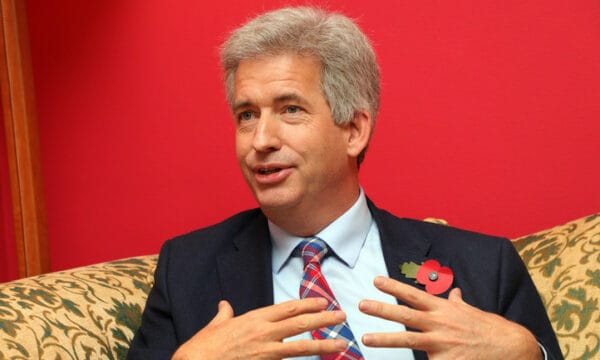
The charge d'affaires at this embassy, Anu Prattipati, said in early June that Kosovo is failing to meet the growing demands for energy supply and cited Kosovo Customs data, which shows that the country has spent 735 million euros importing electricity from neighboring countries in the last four years.
This data shows an increase from 142 million euros in 2024 to 259 million euros in 2025.
According to Prattipati, in the near future, as the price and demand for energy continue to rise, Kosovo will increasingly depend on its neighbors.
Prattipati, in the opinion piece published in local media, also quoted the US Department of Energy's special envoy, Joshua Volz, who told Radio Free Europe on May 10 that "the energy system in Kosovo is in urgent need of modernization and presents an excellent opportunity for American industry and technology," and that "the Department of Energy will stand ready to help facilitate cooperation between American industry and industrial partners in Kosovo."
"To address these structural challenges, Kosovo should join the planned American natural gas projects across the Balkans. These projects could provide American energy resources for Kosovo," Prattipati wrote.
Recently, several Western Balkan countries have signed agreements with American companies and the US to expand their gas networks.
Albania, Croatia and Bosnia and Herzegovina have joined important initiatives, including a major project to build a gas pipeline that aims to disconnect Sarajevo from Russian supplies. /REL