







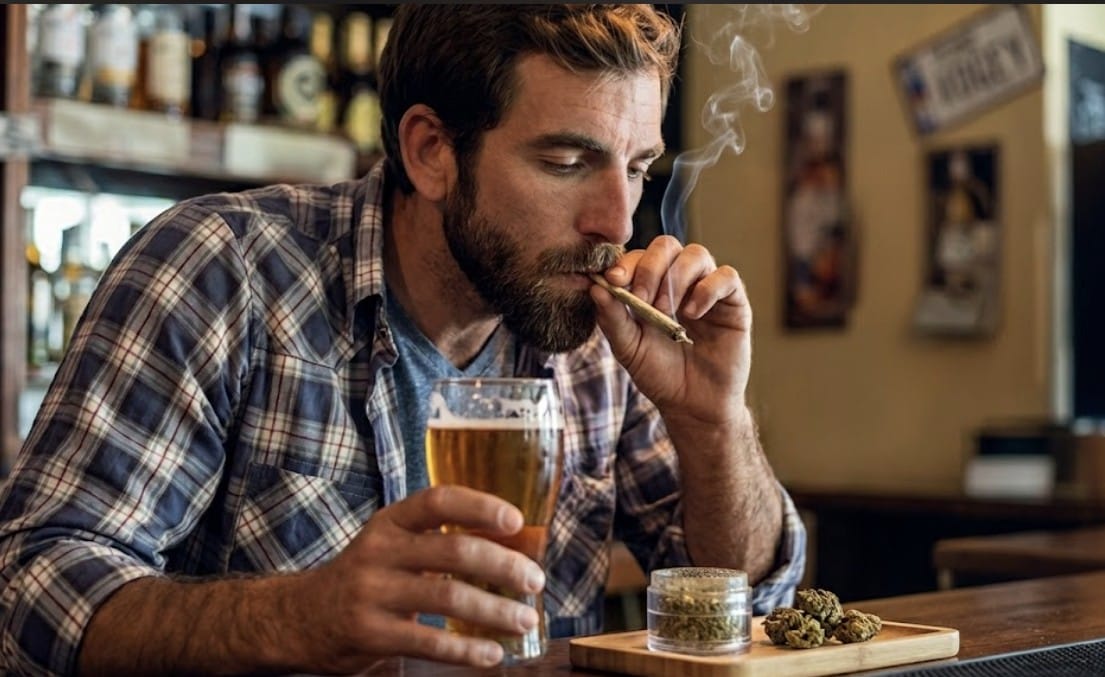
The Institute of Human Anatomy has broken down the main differences between alcohol and cannabis. Both are among the most widely used substances in the world, but one of them may be far more harmful to you in the long run. The Institute of Human Anatomy (IOHA) has analyzed the main differences, using real human cadavers to show how these substances travel through the body’s organs and how they change brain chemistry. When you drink a glass, alcohol spreads quickly through your whole body because it dissolves easily in water and passes rapidly through cell membranes. THC, the psychoactive compound in cannabis, behaves differently. It dissolves in fat, which allows it to accumulate in fatty tissues such as the brain and remain in the body for much longer. A recent video posted on IOHA’s YouTube channel explains that smoking cannabis sends THC into the bloodstream within minutes, while products that are swallowed (such as cannabis-infused foods or candies) first pass through the liver, making their effects more intense and longer-lasting. Alcohol, meanwhile, follows a “relatively predictable absorption route” through the stomach and small intestine. Alcohol destroys organs, while THC changes how the brain works “With alcohol, the effects tend to show up as direct, progressive (gradual) damage to organs over time,” said Jonathan Bennion, IOHA’s director of education.  “Alcohol slows down brain activity and, over time, is more likely to cause direct progressive damage to organs, especially the liver. It also has a clear link to the risk of cancer.” “THC, on the other hand, changes the way signals are processed in the brain and tends to have effects that are more functional than structural.” Alcohol-related memory loss is more dangerous than cannabis brain fog One of the risks of alcohol is that, as doses rise, the brain can lose its ability to form new memories altogether. “That is what leads to memory loss, where a person may have been awake, talking and communicating, but later remembers nothing of what happened,” says Bennion.
 “THC does not block the formation of memories in the same way, but it changes or interferes with how information is processed and organized. Alcohol can suppress the formation of memory, while THC tends to distort cognitive processing.” The difference between alcohol’s cancer risk and the long-term effects of cannabis Because alcohol is classified as a carcinogen, the lead dissector (the autopsy expert) explains that ‘organizations such as the World Health Organization stress that there is no level of alcohol consumption that is completely risk-free for long-term health, and that even moderate consumption can contribute to the risk of cancer over time.’ “When it comes to THC itself, especially in forms that are not smoked (such as edibles), there is currently no strong evidence that it directly causes cancer at typical levels of use,” adds Bennion. “Alcohol has a well-established, dose-dependent link to cancer risk. The link between THC and cancer is less clear and depends more on how it is used.” According to IOHA, alcohol generally causes more direct physical damage, while THC mainly changes brain function and cognition, especially with heavy use. Side effects of alcohol -Impaired judgment and impulse control -Memory impairment and memory loss (blackouts) -Poor coordination and balance -Slowed breathing and heart rate at high doses -Risk of alcohol poisoning -Lower blood pressure due to widened blood vessels -Increased appetite due to reduced self-restraint Side effects of cannabis / THC -Anxiety and paranoia in some users -Brain fog and distorted cognitive processing -Difficulty concentrating and following conversations -Forgetfulness and losing the thread of thought -Increased heart rate -Red eyes from widened blood vessels -Dry mouth caused by reduced saliva production -Increased hunger (known as “the munchies”) -Long-term effects on memory, attention and learning.
Our editorial team writes and publishes its articles with the help of AI, and every article is reviewed by our editors.









