







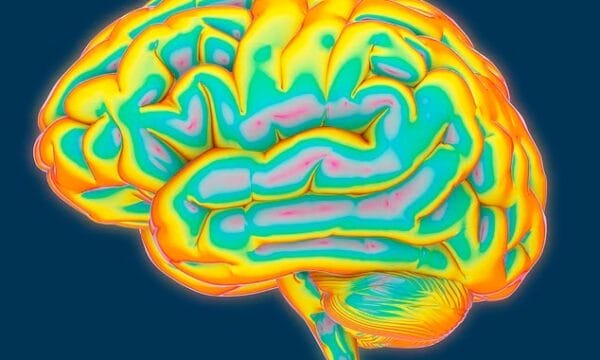
Some drugs that lower body temperature may help protect the brain from damage caused by stroke, cardiac arrest and spinal cord injuries. Scientists are studying whether these drugs could be used by emergency teams before patients reach hospital, using the critical minutes to save lives.
Researchers believe that controlled lowering of body temperature through drugs can reduce damage to nerve cells and improve the chances of recovery.
This method, known as therapeutic hypothermia, aims to slow the biological processes that can worsen brain damage after the supply of blood and oxygen is interrupted.
While scientists are testing combinations of specialized drugs, the possibility of using common medicines such as paracetamol, aspirin and ibuprofen is also being examined.
However, experts stress that this approach remains experimental and has not yet been proven to save patients’ lives.
The first hour may be decisive for survival
Samir Ayoub, senior lecturer in pharmacology at the University of East London, is among the researchers investigating the use of drugs to lower body temperature in emergency situations.
According to him, the long-term goal is for patients in critical condition to be able to receive treatment at the scene.
“Our ultimate goal is for patients in critical condition to receive drug-induced hypothermia treatment before they reach hospital,” Ayoub explained.
He stressed that the first hour after a cardiac arrest, spinal cord injury or stroke is especially important.
“We know that patients need to be cooled quickly to have the best chance of a positive outcome,” he added.
According to the researchers, early intervention may help limit the damage that develops after brain cells are left without an adequate supply of oxygen.
What is therapeutic hypothermia?
Therapeutic hypothermia is a medical method that involves the controlled lowering of body temperature.
Instead of the normal body temperature of about 37 degrees Celsius, the temperature can be lowered to roughly 33 to 34 degrees for a period of 12 to 24 hours.
Controlled cooling has been used in medicine to protect the nervous system in certain situations, especially in newborns who suffered oxygen deprivation during birth and in some patients after cardiac arrest.
It has also been studied in traumatic brain and spinal cord injuries.
The principle behind this method is that lowering the temperature can slow brain metabolism, reduce inflammation and limit the processes that cause nerve cells to die.
However, the effectiveness of hypothermia varies depending on the patient’s condition and has not been established as a routine treatment for all these emergencies.
Why are scientists looking for a faster method?
Traditional cooling methods include placing cooling devices on the skin or administering cold saline intravenously.
These procedures require specialized equipment and monitoring, which is why they are often carried out in hospital settings.
Researchers believe that drugs that lower temperature from within the body could be more practical in emergency situations.
This would allow ambulance crews to start treatment earlier, without waiting for arrival at hospital.
In the case of stroke, rapid treatment is especially important, since delays can increase the risk of permanent damage and death.
However, administering temperature-lowering drugs should not delay proven treatments, such as restoring blood flow in ischemic stroke.
Two existing drugs show promising results
A new study by scientists at Capital Medical University in Beijing examined the effects of two drugs that have been used in medicine for decades.
These are chlorpromazine and promethazine.
Chlorpromazine is used to treat several psychiatric disorders, including schizophrenia, as well as severe nausea and vomiting.
Meanwhile, promethazine is commonly used for allergies and nausea.
The researchers found that the combination of these two drugs significantly lowered body temperature in mice and primates involved in the experiments.
Furthermore, the treatment reduced brain damage after stroke in the animals studied.
These results prompted the scientists to test the method in humans as well.
What did the study with 32 patients show?
In the next phase, the researchers conducted a clinical trial with 32 patients who had just suffered an ischemic stroke.
This type of stroke occurs when a blood clot blocks a vessel that supplies blood to the brain.
During the study, patients were given different doses of the two-drug combination.
At the highest dose, body temperature dropped by about one degree Celsius.
However, this drop was smaller than that observed in animal experiments and was not sufficient to cause therapeutic hypothermia.
One possible explanation relates to anatomical differences between humans and animals.
The human body has a lower ratio of skin surface area to body mass, meaning heat can leave more slowly through the skin.
The results show that the method has an effect on body temperature, but it has not yet been shown that it can provide the cooling needed to protect the brain in humans.
How could these drugs protect the brain?
Professor David Baker, emeritus specialist in neuroimmunology at Queen Mary University of London, explains that the exact mechanisms of therapeutic hypothermia are still not fully understood.
However, controlled lowering of temperature may help limit further brain damage in certain circumstances.
“We still do not fully understand how it works, but therapeutic hypothermia can almost certainly protect the brain from further damage,” Baker told Good Health.
One theory is that the drugs affect the brain mechanism that regulates body temperature.
Under normal conditions, when temperature falls, the body triggers muscle shivering to produce heat.
This natural reaction can make cooling through external devices more difficult.
According to the researchers, the drugs may help suppress this protective mechanism.
“Drug-induced hypothermia may be more suitable than physical cooling, because the body is programmed to resist the cold,” Baker explained.
He added that shivering is a way of generating heat, while cooling from within may prevent this response from being triggered.
The drugs may also work by widening blood vessels, making it easier for heat to leave the body, and by lowering the metabolic rate.
Physical cooling can cause complications
One problem with external cooling is that the body may respond to the drop in temperature with unwanted physiological changes.
These can include a rise in stress hormones, a slowing of the heart rate and a drop in blood pressure.
Cooling can also affect the function of white blood cells, increasing susceptibility to infections.
Another concern relates to blood clotting, since hypothermia can interfere with normal coagulation processes and increase the risk of bleeding.
Scientists hope that a drug-controlled method can avoid some of these problems, but this has not yet been proven.
Can paracetamol, aspirin and ibuprofen be used?
Besides specialized drugs, researchers are also examining the possibility of using common medicines that lower temperature during fever.
Among them are paracetamol, aspirin and ibuprofen.
Samir Ayoub has particularly studied the effect of paracetamol on body temperature.
According to his research, paracetamol can lower temperature by up to one degree Celsius for a period lasting up to four hours.
In an analysis published in 2021 in the scientific journal Temperature, Ayoub suggested that this effect is linked to the drug’s impact on an enzyme called COX-1.
This enzyme takes part in the production of prostaglandins, substances that play a role in regulating and raising body temperature.
However, lowering temperature with these drugs does not mean they are suitable for inducing therapeutic hypothermia in patients in critical condition.
Why might a combination of drugs be needed?
Ayoub believes that achieving a sufficient reduction in body temperature may require combining several medicines.
According to him, using a single drug in very high doses could create serious risks for the patient.
“If you use only one drug, you would need a dose so high that it could cause harmful effects,” he explained.
“We know that high doses of drugs can cause toxicity, even if they are used for a short period.”
As an example, he mentioned paracetamol.
“Paracetamol can cause liver damage if it is given above the recommended therapeutic dose,” Ayoub warned.
For this reason, researchers are examining whether a combination of drugs can produce the desired effect without the need for dangerous doses of each medicine.
Experts remain skeptical about the results
Although some researchers consider the approach promising, other experts warn that the results so far are very limited.
Professor Malcolm Macleod, a specialist in neurology and translational neuroscience at the University of Edinburgh, expressed doubts about the effectiveness of the method.
He stressed that the Chinese scientists managed to lower body temperature in humans by less than one degree Celsius.
According to him, this is too small a reduction to achieve the desired cooling effect.
“It is far too little to achieve a sufficient cooling effect,” Macleod said.
He added that the chances that this method, in the form tested so far, will bring significant clinical benefits are low.
An idea that could change emergency treatment, but needs more evidence
The possibility of using drugs to lower body temperature before arrival at hospital represents an interesting direction for research in emergency medicine.
If a safe and effective method is developed, it could help start protecting the brain earlier after several serious injuries.
However, current studies have not shown that this approach reduces mortality or disability in patients.
For now, drug-induced hypothermia remains an experimental method. Paracetamol, aspirin and ibuprofen should not be used on their own to treat stroke, cardiac arrest or spinal cord injuries. In these situations, an immediate emergency call and specialized treatment remain decisive for survival and the patient’s recovery.
Our editorial team writes and publishes its articles with the help of AI, and every article is reviewed by our editors.









