







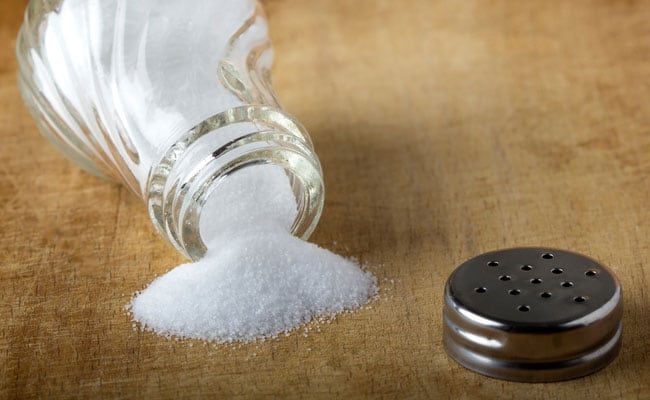
Salt becomes unhealthy when people consume more of it than they should.
The point is not to eliminate this food completely, but simply not to exceed the right amount when using it, since salt negatively affects many diseases, not only those of the cardiovascular system.
Water retention
Excessive salt intake causes water retention and bloating in some people. The effects may be short-lived if you deliberately reduce your sodium intake, but they can seriously affect the kidneys in the long term.
Raises blood pressure
One of the main effects of salt is a rise in blood pressure. This happens because salt affects the retention of fluids in the body, which puts pressure on the arteries and helps lead to hypertension. This should not be seen as a minor problem, since hypertension causes 62% of cardiovascular problems and 42% of heart disease.
Affects the kidneys
If you eat a lot of salt, elevated sodium levels interfere with the smooth functioning of the kidneys, which are then unable to filter the blood properly.
Can cause osteoporosis
Excess salt in food over a long period can lead to fluid accumulating in the body’s tissues and cells. This forces the body to excrete calcium, leading to bone degeneration and osteoporosis.
Can lead to a stroke
When the kidneys begin to malfunction because they cannot remove the excess salt, the result is high blood pressure, which can then lead to a stroke.
Causes migraines
Excessive salt intake also causes headaches that can turn into migraines. These headaches are caused by dehydration. You should keep yourself hydrated and drink plenty of water to counter the side effects of salt.
Our editorial team writes and publishes its articles with the help of AI, and every article is reviewed by our editors.









