







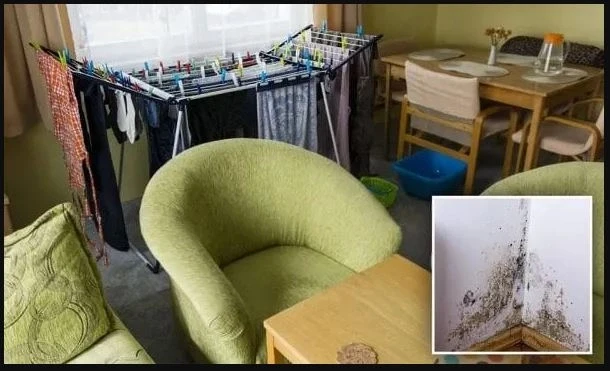
Drying clothes in poorly ventilated spaces can increase the amount of mold growing in homes. This mold is linked to health problems and, in some cases, can even cause death, according to Science Alert.
Drying clothes in poorly ventilated spaces can increase the amount of mold growing in homes. This mold is linked to health problems and, in some cases, can even cause death, according to Science Alert.
When mold grows in a home, it can create black or green stains on walls and usually gives off an unpleasant smell. This should not be ignored, because long-term exposure to mold can have serious consequences for health.
Mold is a broad term that covers a group of fungi that produce tiny particles called spores. These fungi produce spores when conditions are suitable for their growth, such as lower temperatures and high humidity. This is why mold is often found on bathroom ceilings or damp walls, where there is more water that allows fungal spores to grow.
There are many types of mold. The most common ones that cause problems in damp homes are penicillium and aspergillus. It is estimated that people inhale a small number of spores from these fungi every day.
Fortunately, the human immune system is very good at detecting and destroying fungal spores, which limits the number of lung infections caused by fungi, even though we are constantly exposed to them. Immune cells called macrophages are found inside the air spaces of the lungs (called alveoli), and these cells absorb anything that enters the body through breathing, including fungal spores.
Risks that mold poses to people with weak immune systems
However, there are many people whose immune systems cannot remove fungal spores. In these cases, fungi can cause dangerous infections or other health problems such as asthma.
People with weakened immune systems are at higher risk of severe fungal infections. Fungi such as aspergillus cause infections in patients with limited immune function, or who have lung damage from diseases such as asthma, cystic fibrosis and chronic obstructive pulmonary disease (COPD), which is linked to excessive tobacco use.
In people with asthma, the immune system overreacts to stimuli (including fungal spores), causing inflammation in the lungs. This inflammation makes breathing harder by narrowing the airways.
In very extreme cases, fungal spores not only cause inflammation but can also block and obstruct the airways, causing bleeding in the lungs. This happens when the spores germinate and form long, spider-like filaments called mycelium, which create clots that block the airways and damage the sensitive tissue of the lungs.
Rising drug resistance
Aspergillus infections are treated with antifungal drugs called azoles, which prevent fungal cells from forming. Azoles are very effective, but more and more cases of resistance to them in aspergillus have been reported, which is a major concern.
We have a limited range of antifungal drugs to treat fungal infections, and when resistance develops, it can drastically reduce the treatment options a patient has.
Resistance to drugs such as azoles can develop in patients who use them for long periods, but recent studies have shown that resistance develops more often in environments where fungi are found. This means that, even before a patient is diagnosed with an aspergillus infection, it may be too late for antifungal medicines to work.
The development of drug resistance in environmental fungi has been linked to the use of azoles and other antifungal drugs in agriculture. Fungal infections are a major problem for plants, which need protection from them just as people do. Unfortunately, some of the same drugs used for people are also used in farming.
Climate change may also drive drug resistance in environmental fungi. Exposure to high temperatures has recently been identified as a factor that helps fungi develop resistance to common antifungal drugs.
Health damage caused by exposure to mold
While a healthy immune system means that typical exposure to fungal spores will not cause health problems, exposure to very large amounts of fungal spores can be fatal, even for people with no underlying health problems.
In 2020, a baby named Awaab Ishak died as a result of high exposure to fungal spores caused by dampness and excessive mold in the home.
The baby’s death led to a change in British law (Awaab’s Law), which requires landlords to respond promptly to dampness in the homes where tenants live. The aim is to ensure that residents are not exposed to excessive levels of fungal spores that could affect their physical and mental health.
How to prevent mold at home
To keep a home free of mold, it is very important to have good ventilation and to take other measures to reduce humidity, such as using a dehumidifier or investing in a heated drying rack to dry clothes indoors during winter.
Our editorial team writes and publishes its articles with the help of AI, and every article is reviewed by our editors.









