







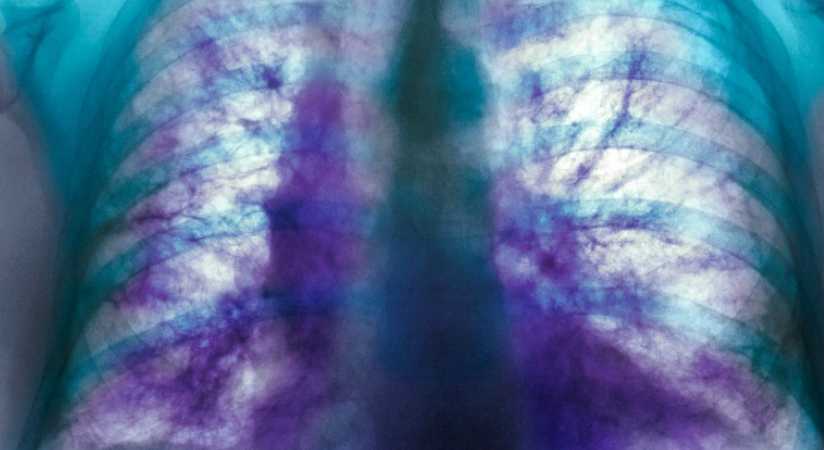
A new study has uncovered a previously unknown mechanism that could help treat idiopathic pulmonary fibrosis (IPF), a severe and often fatal lung disease for which there is currently no cure.
IPF causes damage and stiffening of lung tissue, making breathing difficult and leading to a gradual worsening of patients’ condition.
Although two drugs exist that slow the progression of the disease, they do not improve symptoms.
Researchers led by Stavros Garantziotis found that a gene called Tlr5 plays a key role in protecting the lungs.
This gene produces the TLR5 receptor, which helps the immune system recognize bacteria and control their spread.
In experiments on mice, those with a mutation in this gene or without it developed more fibrosis, lost more weight and had lower survival rates than normal mice.
The study also showed an important link between the lung microbiome and the development of IPF. TLR5 receptors are activated after lung damage and help control harmful bacteria.
This may explain why not everyone exposed to risk factors such as smoking, repeated infections or pollution develops the disease.
To test a possible treatment, the researchers used a bacterial protein that activates the TLR5 receptor. Mice that received this treatment before lung damage showed less fibrosis, lost less weight and survived longer.
The effect was not seen in mice that lacked the Tlr5 gene, confirming the importance of this receptor in protecting the lungs.
The team is now working to develop an inhaled treatment that targets the cells of the airways directly, in the hope that this approach could stop or slow the progression of the disease.
The next step will be testing these results in humans to see whether activating TLR5 could be used as a new therapy against idiopathic pulmonary fibrosis.
Our editorial team writes and publishes its articles with the help of AI, and every article is reviewed by our editors.









