







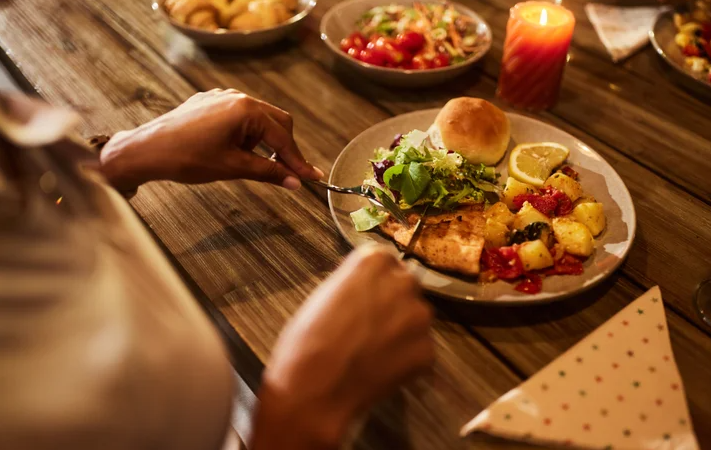
Among diets on social media, debates between professionals about various products, and the inclusion of technology in health information, it is very easy to become a health ‘fanatic’. Moreover, with all the information online and on social media, it can be hard to know what you need and what you don’t when it comes to your health, especially nutrition. There are videos everywhere on social media in which people describe certain foods as “bad” or as containing “fake ingredients,” which only fuel a social craze for “eating healthy.” While there is nothing wrong with eating a healthy diet, since it is an excellent way to improve your well-being, there is a line that healthy eating can cross and then turn into an obsession. An excessive focus on it can turn into what is known as orthorexia, a condition that is becoming increasingly common in society, and several studies say this is mainly due to pressure from social media. You won’t find orthorexia in the DSM-5, the official manual for mental health diagnoses, but two dietitians told HuffPost they expect it will eventually become an official diagnosis. “It is a subclinical eating disorder, so it is not something that has a clinical diagnostic code, but it is widely recognized in the eating disorder community,” said Beth Auguste, a dietitian. “Orthorexia can generally be categorized as a preoccupation with eating healthy and a fixation on the purity of food,” Auguste added. “It is an obsession with what someone perceives as the right way to eat, or the healthy way to eat,” added Beth Heise. Since many people enjoy eating healthy foods, or do so to keep health markers such as cholesterol and blood sugar under control, it can be hard to tell what is simply a healthy diet and what is dangerous. “It is so hard to distinguish that even professionals may find it difficult to tell. They ask questions like, is this person really healthy, or are they on the edge of a disorder?” Auguste pointed out. Below, Auguste and Heise share the signs that may indicate you are crossing into orthorexia territory and what to do if you are concerned about your eating habits. You have extreme dietary restrictions (that are not related to an allergy or a doctor’s recommendation). “Orthorexia can show up in the same ways as anorexia, where it can be restrictive, where you avoid certain food groups, and where you feel intense anxiety if you do not have complete control over the food you eat and where it comes from,” said Auguste. You may find yourself creating strict rules about your food consumption, Heise added. For example, you might tell yourself you can only eat brown rice and can never make exceptions for white rice. “It ends up focusing less on healthy eating, as it usually does at the start, and more on an unhealthy obsession with the purity of food, or ‘clean eating,’ or ‘eating right,’” said Heise. When diet interferes with your social life “When it crosses the line, it starts to interfere with your daily activities,” said Auguste. If your stress about food interferes with your social commitments, for example if you turn down plans because you are not sure about the food situation, this may be cause for concern. “When it affects your ability to live in the world comfortably, then it is a problem you need to address,” Auguste added. “It ends up focusing less on the average person who is concerned about healthy food, and more on the fixation with it, to the point where it is almost your personality,” said Heise. You spend a lot of time analyzing ingredient lists. It is normal to check ingredient lists and nutrition labels on foods from time to time, especially if you have an allergy or a specific nutritional goal you are trying to reach. But for someone with orthorexia, they may find themselves “compulsively, all the time, analyzing all the ingredients,” said Heise. This can turn into hours spent planning meals or researching the nutritional value of every ingredient that goes into your food, she pointed out. You feel anxious or guilty when you break food rules. “I think the final line comes when you start to feel like you are thinking about healthy eating all the time,” said Heise. “If you feel anxious, nervous about eating something, and you feel this way often, then this may be a sign that you are thinking about it too much,” she said. The same goes if you feel guilty after breaking any of your food rules, Heise added. Auguste added that if your thoughts about food are harming your mental health, you should consider talking to someone. Auguste also said that if it is affecting your physical health, it is absolutely a red flag. What to do if you are in this situation With the support of a dietitian or mental health professional, you can determine whether your healthy eating is just that, or something more. “It is very important to talk to someone, such as a dietitian who specializes in eating disorders, or a therapist who specializes in them, who can help you understand whether this is a problem for you,” said Auguste. “You can absolutely recover from orthorexia if you have the right support,” said Heise, “so as soon as you notice these signs, deal with them as quickly as possible, so that they do not turn into something that will rule your life.”
Our editorial team writes and publishes its articles with the help of AI, and every article is reviewed by our editors.









