







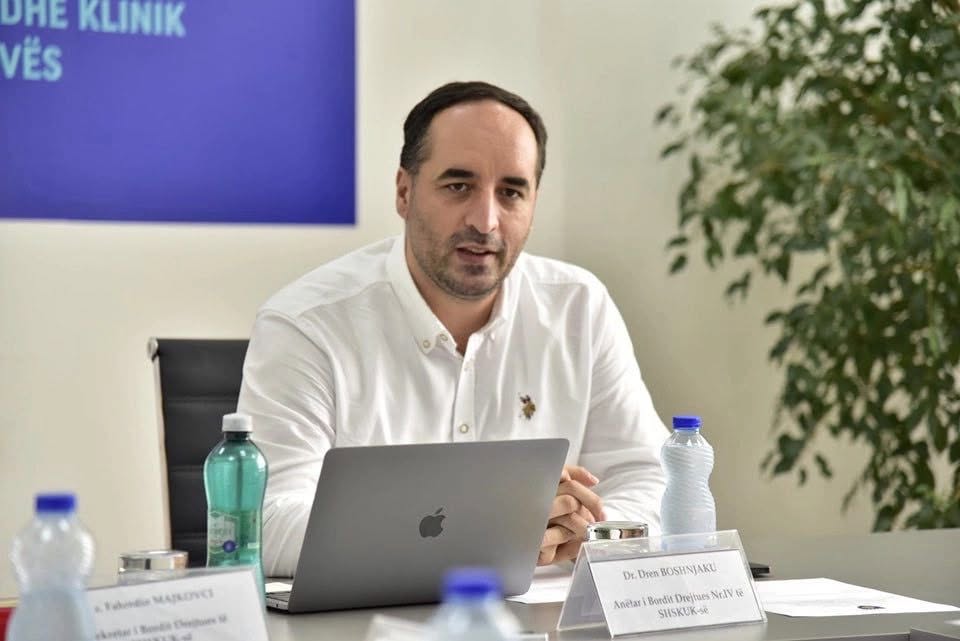
A stroke, or brain attack, is a medical emergency that occurs when the blood supply to part of the brain is interrupted or when a blood vessel in the brain ruptures. As a result, brain cells are damaged within minutes, and serious consequences such as paralysis, difficulty speaking or loss of other vital functions can follow. Stroke remains one of the leading causes of death and long-term disability worldwide. However, experts estimate that most cases can be prevented through control of risk factors and a rapid response to the first symptoms. In Kosovo, the challenges relate not only to treating patients but also to the lack of public awareness of stroke warning signs. Neurologist Dren Boshnjaku discusses the importance of the first minutes, risk factors, treatment and rehabilitation.
Stroke is often described as a “silent crisis.” Why is it considered that way, and what are the main risk factors?
Stroke is considered a “silent attack” because of the lack of public information and awareness about warning signs and the need for an emergency response, and because of silent cerebral infarcts that occur without obvious clinical symptoms. Ten modifiable risk factors (hypertension, physical inactivity, blood lipid disorders, diet, abdominal obesity, psychosocial factors, smoking, cardiac causes, alcohol and diabetes) account for more than 90% of the global risk of stroke. Hypertension remains the most critical factor for primary prevention.
What are the main reasons patients with stroke symptoms delay seeking care, and which signs should not be ignored?
The main reasons for delay include failure to recognize stroke as an emergency, not recognizing the signs and symptoms, visiting the family doctor instead of calling emergency services, and fear or denial of the situation.
Signs that should not be ignored are weakness or numbness of the face, arm or leg on one side of the body, speech problems, vision problems, and loss of balance or coordination. Other symptoms that require attention are spinning dizziness, double vision and difficulty articulating words.
How many new ischemic stroke cases are recorded each year in Kosovo, and how many patients are left with long-term consequences?
Kosovo still does not have accurate statistical data due to the lack of a health information system. According to available records, around 2,700 stroke patients were treated in 2024 at the Neurology Clinic and in general hospitals. The long-term consequences are considerable: 90 days after a stroke, 10% of patients under 55 and 30% of those over 65 develop a new moderate or severe disability. About 70% of patients with a severe stroke die or are left with significant disability within five years.
How strongly is stroke linked to hypertension, diabetes, high cholesterol and smoking?
The link is extremely strong, and together these factors account for around 90% of the global risk of stroke. Hypertension is the most powerful risk factor, and almost 80% of people who have a stroke had hypertension beforehand. Diabetes is associated with double the risk of ischemic stroke. LDL cholesterol is an important risk factor for ischemic stroke, while smoking doubles the risk of stroke, and the risk rises with the amount smoked.
How is stroke currently treated in Kosovo, and what are the main challenges?
Around 4-5% of stroke patients in Kosovo receive thrombolysis, while a much smaller number undergo thrombectomy. The Neurology Clinic at the University Clinical Centre of Kosovo (QKUK) is currently the only center where these treatments are performed. The main challenges remain the lack of public knowledge about stroke signs, the absence of a “stroke alarm” system, the need to train health staff, and the expansion of capacity for thrombolysis and thrombectomy.
How often do patients end up with long-term consequences, and what role does rehabilitation play?
Long-term complications are common. Cognitive impairment affects 54-65% of survivors, while fatigue, depression and anxiety remain common problems even years after the stroke. Rehabilitation should begin as early as possible and significantly improves self-care ability, motor function and functional independence.
How often does ischemic stroke recur, how high is the risk that a patient will suffer a second stroke, and what does secondary prevention involve?
Ischemic stroke often recurs. Without treatment, the risk of recurrence is about 10% in the first week, 15% in the first month and 18% within three months. Proper secondary prevention can reduce this risk by up to 80% and includes antithrombotic therapy and aggressive management of risk factors.
Do you think citizens in Kosovo have enough knowledge about stroke symptoms and risk factors? What would be your main message for stroke prevention?
Based on global evidence, knowledge of stroke signs and risk factors remains low in low- and middle-income countries. However, the main message is that up to 90% of ischemic strokes are preventable through control of modifiable risk factors. The “Life’s Essential 8” strategy includes a healthy diet, physical activity, quitting smoking, quality sleep, and control of weight, cholesterol, blood sugar and blood pressure.
The final message is simple: stroke is not fatal. It is preventable and treatable.
Our editorial team writes and publishes its articles with the help of AI, and every article is reviewed by our editors.









