







While you sit on a toilet seat that hundreds of other people have used during the day, you may wonder: how long do pathogens survive in the bathroom?
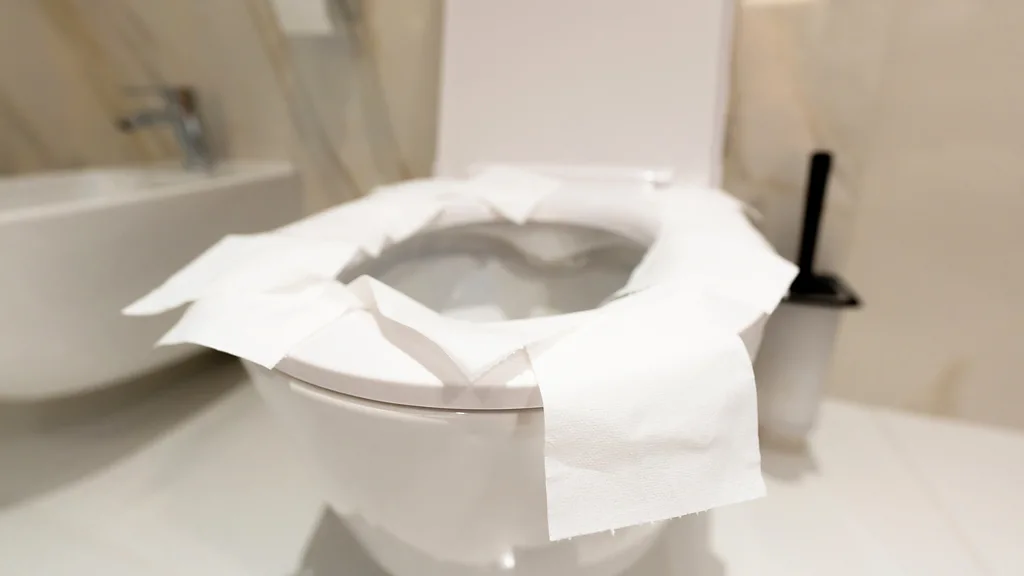
As soon as you walk into a public toilet, it is often impossible not to feel a strong sense of disgust. The sight of urine splashed across the seat and floor, and the strong smell of someone else’s bodily fluids, can overwhelm your senses. You may open the stall door with your elbow, press the flush button with your foot, or cover the entire seat with toilet paper if sitting directly seems too disgusting.
But can you really get sick simply by sitting on a toilet seat? Or are the elaborate techniques some people use to avoid contact simply unnecessary? Here is what microbiologists say.
What you (probably) won’t catch
“In theory, yes, you can catch an illness from a toilet seat, but the risk is extremely low,” says Jill Roberts, a professor of public health and microbiology at the University of South Florida.
Take sexually transmitted infections (STIs) as an example. Most of the bacteria and viruses that cause them, from gonorrhea to chlamydia, do not survive long outside the human body, let alone on a cold, hard surface like a toilet seat.
That is why most STIs are thought to spread only through direct genital contact and the exchange of bodily fluids. For fresh bodily fluids to be transferred from a toilet seat to the genitals, whether by hand or by toilet paper, you would have to be very unlucky, Roberts says. So, while it is wise to be careful and maintain good hygiene, such as avoiding toilets that are visibly dirty, this should not worry you too much.
“If toilet seats transmitted STIs very easily, we would see them often in all age groups and among people with no history of sexual activity,” Roberts says.
Similarly, the professor says it is impossible to catch a bloodborne disease from a toilet seat. First, you would see and avoid someone’s blood on the seat if it were there. She adds that, in any case, she would not expect bloodborne pathogens to spread easily without sexual activity or injection with contaminated needles.
It is also very unlikely to catch a urinary tract infection (UTI) from a toilet seat, Roberts says. “You would only get a UTI if you transferred feces from the seat into the urinary tract, but that would require large amounts of feces,” she says. Much more common is developing a UTI by wiping yourself near the genitals.
What you can catch
There are some exceptions among STIs that survive longer. Human papillomavirus (HPV), which causes genital warts, can survive on surfaces for up to a week, although this depends on several factors.
“These viruses are very small and have very stable protein coats that give them greater longevity in the environment,” says Karen Duus, a professor of microbiology and immunology at Touro University Nevada.
HPV is resistant to hand sanitizers and requires a 10% chlorine concentration to destroy its protective protein coat, Duus says. However, these viruses can enter the body only if the skin barriers in the genital area are damaged, such as by a rash or wound, while you are sitting on the toilet. Therefore, HPV is usually transmitted only through skin-to-skin sexual contact, such as oral, anal or vaginal sex.
Similarly, in theory, someone with genital herpes during an outbreak could leave the virus on a toilet seat, and other users could be at risk if they have damaged skin or a weakened immune system, says Daniel Atkinson, clinical director of the online health service Treated.com in the United States. But it does not happen quickly.
Should I cover the toilet seat?
Covering the seat with paper before sitting, or using other covers, may seem like the cleanest way to use a public toilet.
According to a 2023 YouGov survey, about 63% of Americans use public toilets, but about half of them first cover the seat with toilet paper. The survey also found that about 20% of people squat over the seat.
In the US, home toilets are much dirtier than the public toilets studied at universities, says Charles Gerba.
However, a layer of paper on the seat will not protect you much from pathogens, because paper is porous and does not stop microbes from passing through and reaching the genitals. And squatting can do more harm than good, says Stephanie Bobinger, a clinical specialist in pelvic health at Ohio State University Medical Center.
When women squat over the toilet to urinate, they tense the pelvic floor and pelvic muscles, blocking the flow of urine and forcing them to push harder, which can cause urinary infections.
The real problem
In fact, the risk of getting sick in the bathroom does not come from genital contact with the toilet seat.
The greatest risk comes from hands that touch the seat and become contaminated with bacteria or viruses from tiny droplets of your own or others’ bodily fluids. If you then touch your face and mouth with those contaminated hands, the risk is real, Roberts says. “The risk is not to your bottom, but to your mouth from your hands,” she says.
For example, fecal particles on a toilet seat may contain pathogens such as Escherichia coli, Salmonella, Shigella, Staphylococcus or Streptococcus, which, if they enter the body, can cause gastrointestinal symptoms such as nausea, vomiting and diarrhea.
Feces may also contain norovirus, a highly contagious pathogen that spreads easily through contaminated surfaces, food, drinks or direct contact with a sick person. The virus can survive on some surfaces for up to two months, and only a small amount is enough to infect someone.
One study found that people are more likely to become infected with norovirus by touching contaminated surfaces in the bathroom than with COVID-19 or adenovirus, which causes flu-like symptoms.
However, the risk this way is low. “The bathroom has not been contaminated with feces for a long time. It is cleaned regularly,” says Roberts.
When microbiology students take swabs from different environments, the number of microorganisms in the computer lab is much higher than in toilet stalls.
In the US, home toilets are much dirtier than public ones, says Charles Gerba, a professor of virology at the University of Arizona. In most places, public toilets are cleaned several times a day, while home toilets are cleaned only once a week.
Beware of the “toilet plume”
There is another way to catch an illness in the bathroom. When you flush, microbes from the toilet bowl are dispersed into the air and spread throughout the stall. This is also called the “toilet plume,” Gerba says.
The most contaminated surface in the bathroom is the floor.
Studies have found that Clostridium difficile bacteria, which are common in healthcare settings and difficult to eliminate, can spread through the air after flushing and be inhaled.
The risk comes not only from toilet seats, but also from toilet lids, door handles, flush buttons, faucets and towel holders that are touched by hands.
Bathrooms often also contain pathogens that are unrelated to urine or feces, but come from sneezing and coughing, such as the influenza virus.
How to avoid illness in the toilet
There are a few simple steps to avoid catching an infection from the toilet, whether at home or in public. Elizabeth Paddy, a water hygiene engineer at Loughborough University, recommends touching as few things as possible.
Paddy says toilet manufacturers can make bathrooms safer by designing touch-free mechanisms for flushing, soap dispensers, hand dryers and similar fixtures.
To avoid the “toilet plume,” closing the lid before flushing may seem like a responsible choice, but studies show that viruses can spread even when the lid is closed, because of the high water pressure.
Paddy suggests removing the lids to avoid touching them and then the seat.
There are also air sprays that clean and disinfect the air and surfaces in the bathroom, helping to prevent the spread of microorganisms.
Another option is to flush and leave the stall immediately. Gerba recommends waiting 10 minutes before using a public toilet after someone else, although this can be difficult in practice.
If you use your phone in the toilet, it risks becoming contaminated with the pathogens that have spread, and you may carry them with you even after washing your hands. Only about one in five people wash their hands properly.
So, to prevent catching an illness in a public toilet, wash your hands. Better yet, also use hand sanitizer, because the combination is much more protective than handwashing alone. And do not let fear of germs in toilets worry you: your risk is probably lower than you think.
Our editorial team writes and publishes its articles with the help of AI, and every article is reviewed by our editors.









