







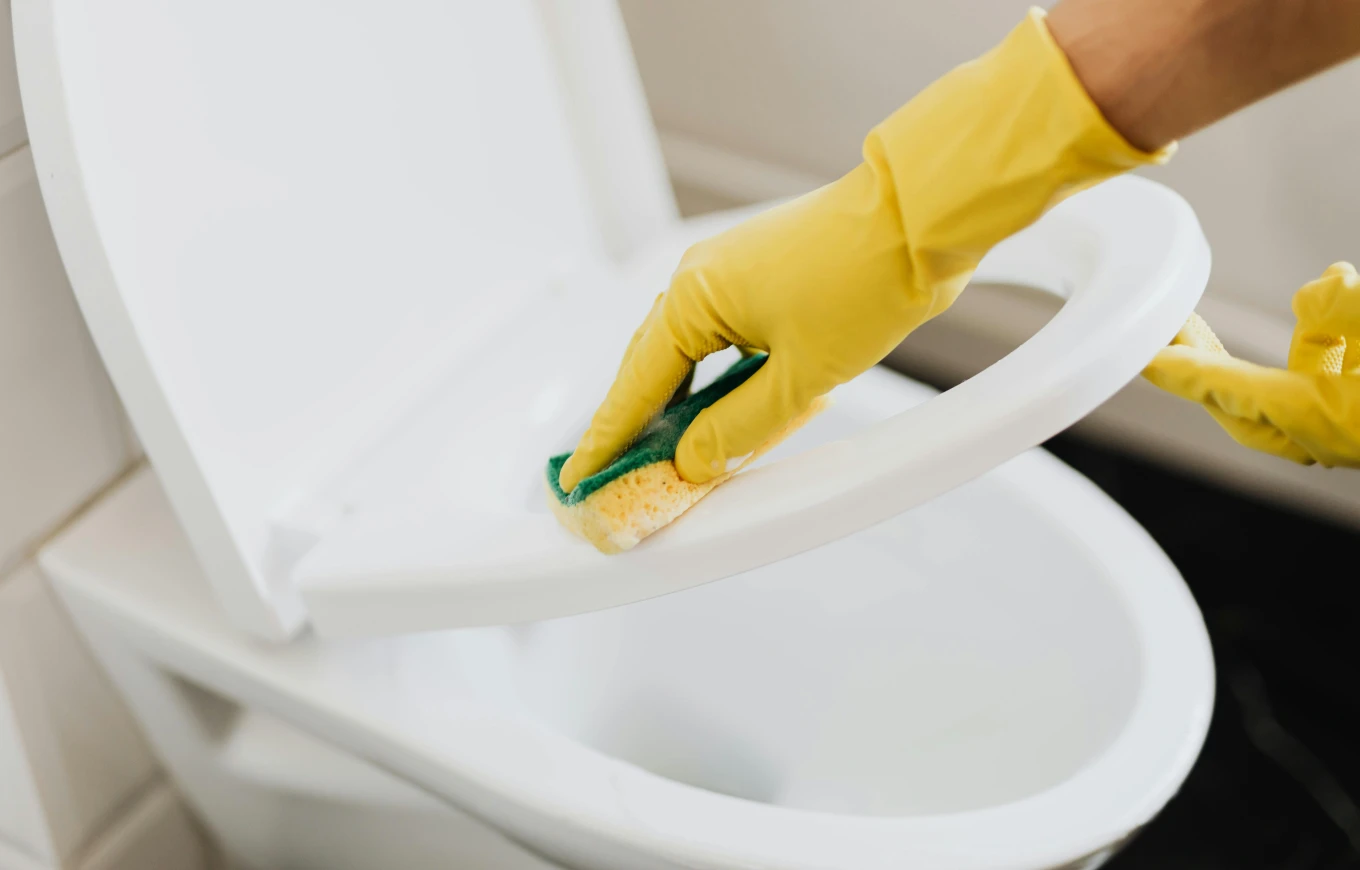
Many people feel uneasy when they walk into a public toilet, because of the smell, urine stains or the thought that hundreds of people have sat there before them. Many try not to touch anything: they open the door with an elbow or cover the seat with toilet paper.
Can you get infected?
“In theory, yes, you can catch an illness from a toilet seat, but the risk is extremely low,” said Jill Roberts, a professor of microbiology and public health at the University of South Florida, according to BBC.
Sexually transmitted infections (STIs) such as gonorrhea and chlamydia don’t survive long outside the body, especially on a cold surface like a toilet seat.
“Otherwise, if toilet seats easily spread sexually transmitted diseases, we would see them often in every age group, even in people with no history of sexual activity,” Roberts said.
Urinary tract infections (UTIs) are almost impossible to catch from a toilet seat. Much more often, they come from improper cleaning after using the toilet.
Some viruses, such as HPV (human papillomavirus), can survive on surfaces for up to a week.
“HPV has a very resistant coating that gives it a longer lifespan in the environment,” said Karen Duus, a professor of microbiology at Touro University, Nevada.
Even here, though, the risk is minimal: the virus can enter only if you have wounds or irritation on the skin of the genital area.
Genital herpes may also survive on a toilet seat in theory, but according to physician Daniel Atkinson, the risk is very small and mainly affects people with weakened immune systems.
Our editorial team writes and publishes its articles with the help of AI, and every article is reviewed by our editors.









