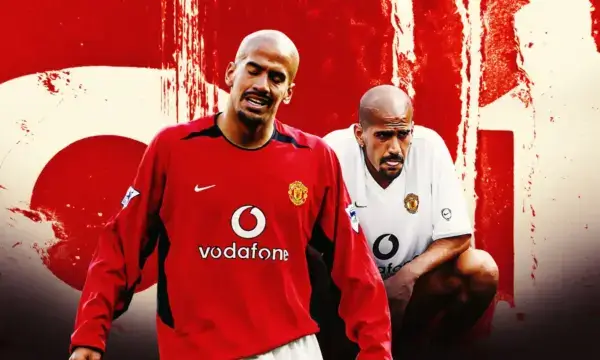
In the summer of 2001, Manchester United broke the British transfer record to sign Juan Sebastián Verón from Lazio. The Argentine midfielder arrived at Old Trafford as one of the best playmakers in the world, but his adventure in England ended far short of expectations. More than two decades later, his story raises an interesting question: Was Verón a failed transfer, or a footballer who arrived before his time?
“I never thought I would spend that much money on a footballer.”
These were the words of Sir Alex Ferguson in July 2001, when Manchester United paid £28.1 million for Juan Sebastián Verón from Lazio.
At the time, the fee was a record for British football.
Ferguson was convinced he had signed an exceptional player who could lift the team to another level.
“He is entering the best years of his career. I believe he will reach his peak and we will benefit from it. He is a world-class, fantastic footballer, with a vision of the game that we can use,” the Scottish manager said.
His optimism was shared by many English football analysts.
Former Liverpool player Mark Lawrenson predicted that with Verón in the squad, Manchester United would become almost unbeatable in the Premier League.
Such a belief did not seem exaggerated. United had won three straight titles in England, and the previous season had finished the championship ten points ahead of Arsenal.
However, the reality would be far more complicated.
From Italy to Old Trafford, with the reputation of a superstar
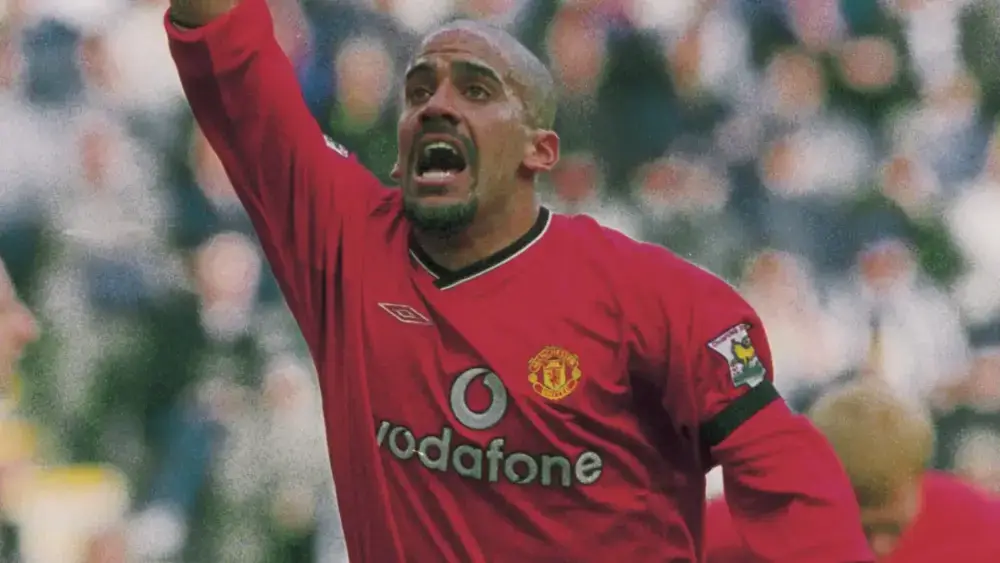
Before his move to Manchester, Verón had built an outstanding reputation in Italian football.
He drew international attention with Argentina at the 1998 World Cup, before transferring to Parma.
In his only season with the Italian club, the midfielder helped Parma win the Coppa Italia and the UEFA Cup.
In 1999, Lazio paid £18.1 million to bring him to Rome.
His debut for Lazio came against Manchester United in the European Super Cup.
The Italians won 1-0, while the Argentine’s performance left a strong impression on Ferguson.
Under Sven-Göran Eriksson, Lazio won Serie A, the Coppa Italia and the European Super Cup, with Verón as the team’s main playmaker.
Known by the nickname La Brujita, “The Little Witch,” a reference to his father, Estudiantes legend Juan Ramón Verón, the Argentine was one of the most elegant and creative midfielders in European football.
But, as time would show, his peak had come at Lazio and not at Manchester United.
A spectacular start that promised much
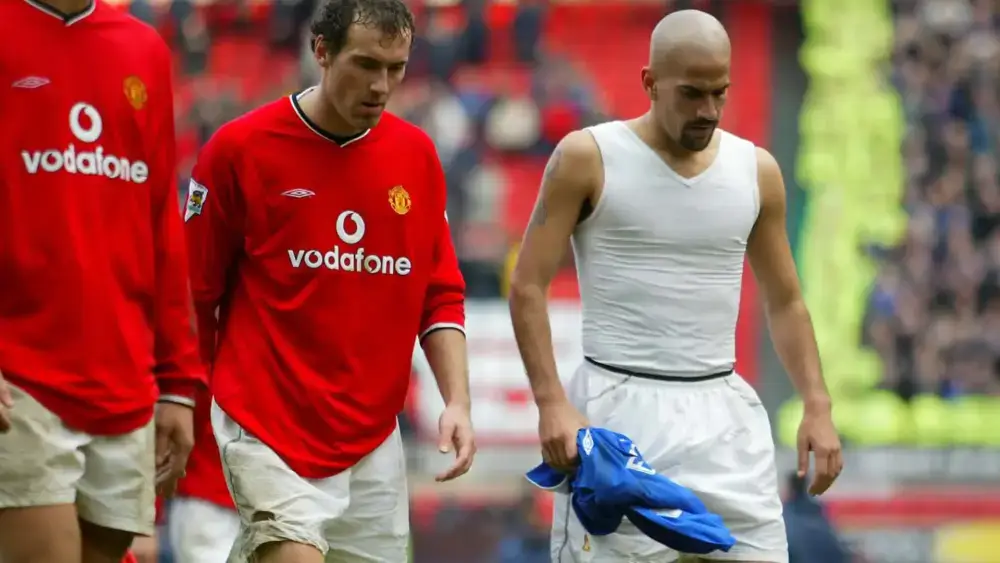
Verón’s first weeks in England created the impression that the record investment was fully justified.
He scored four goals in his first eight Premier League appearances.
He scored his first goal against Everton, after a combination with Roy Keane, in a 4-1 win.
He then scored a beautiful volley against Newcastle United, struck in the dramatic 5-3 comeback win over Tottenham, and converted an excellent penalty against Bolton Wanderers.
His performances also impressed his teammates.
Nicky Butt, who competed with the Argentine for a place in midfield, recalled that Verón’s qualities in training were extraordinary.
“When he played against Everton, I was suspended. I watched and thought: ‘I will never play for United again. I have to find another club.’” Butt told The Times.
“Verón was the best footballer I had ever seen, apart from Eric Cantona. In training he did things I had never seen before.”
The Argentine was named the Premier League’s player of the month for September.
He also shone in the Champions League, especially in the 3-0 win over Olympiacos, where he provided two assists.
One of them was an extraordinary pass from near the halfway line, which cut through the Greek defense and put Ryan Giggs in an ideal position.
Former United manager Ron Atkinson described Verón as the second most technically gifted player to have worn the club’s shirt, behind George Best.
“I am ready to say that, if injuries do not stop him, he will become one of the greatest in the history of Old Trafford. His vision, range of passing and intelligence are phenomenal,” Atkinson said.
The problem was not talent, but the tactical system
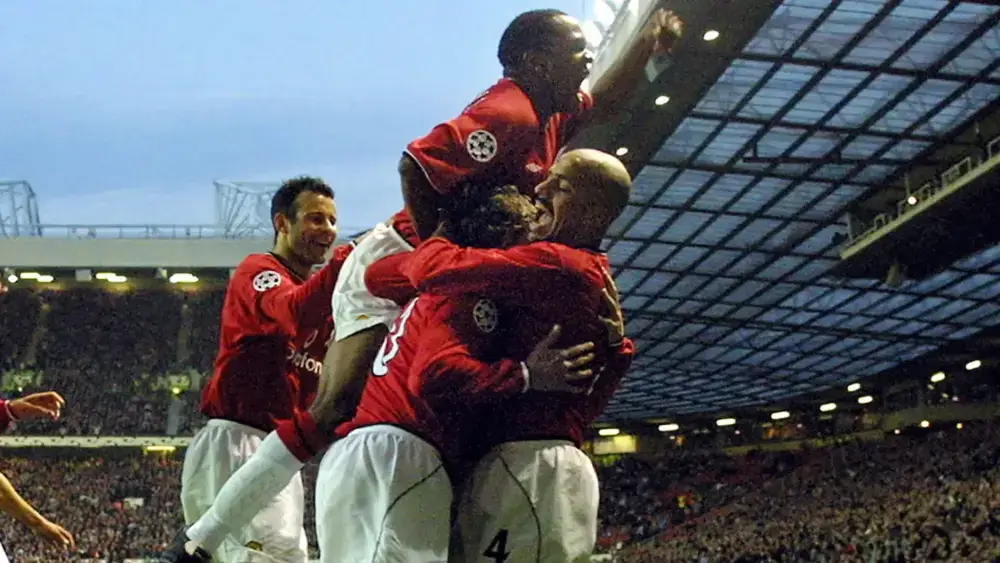
Despite the promising start, problems began to surface during the autumn.
Manchester United suffered a sharp decline in the Premier League, winning only one of six matches after the defeat to Bolton.
The team lost 3-1 to both Liverpool and Arsenal, before being beaten 3-0 by Chelsea at Old Trafford.
Verón had difficulty adapting to the pace and physical demands of English football.
Against Arsenal, he was substituted before the 60th minute, after failing to cope with the dynamic play of Patrick Vieira and Robert Pires.
The problems recurred against Chelsea.
In Italy, tactical systems gave creative midfielders more protection, while in England, losing the ball in central midfield was often followed by quick counterattacks.
Verón tended to drop deep to collect the ball from the defenders, a role that Roy Keane also required.
This created overlap in midfield and forced Paul Scholes to play in more advanced positions, which did not fully suit his characteristics.
Ferguson alternated between the 4-5-1 system, which suited Verón, and the traditional 4-4-2 formation, on which he had built his previous successes.
The team could not find its balance.
In mid-December, after the defeat to West Ham, United had slipped to ninth place in the table, 11 points behind Liverpool.
An unforgettable night against Deportivo La Coruña
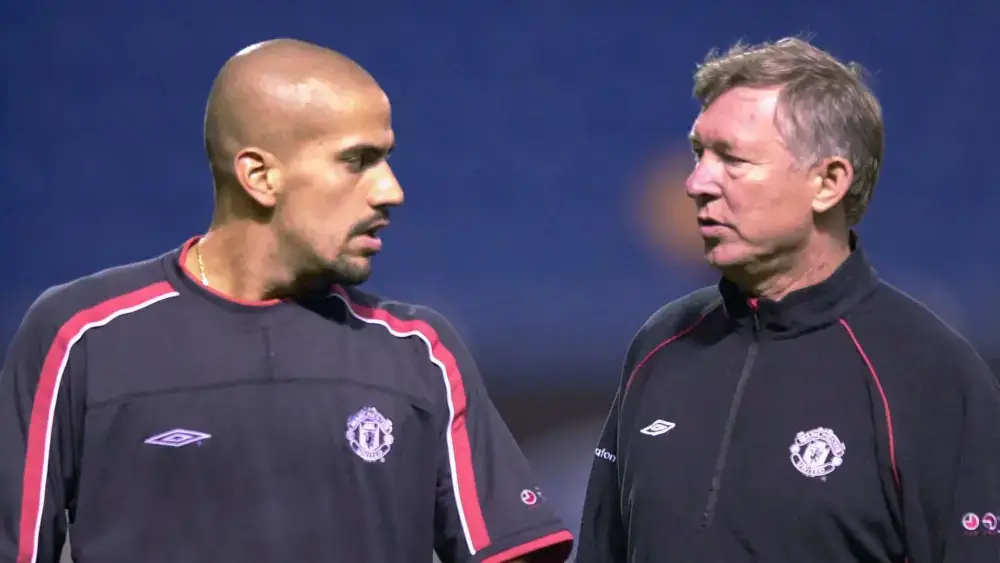
Manchester United managed to recover strongly in the second half of the season.
The team won 13 of 15 matches after the defeat to West Ham and returned to the title race.
However, Verón continued to alternate brilliant performances with decisive mistakes.
In the 1-0 defeat to Middlesbrough, he lost the ball in the move that led to Alen Bokšić’s goal and was substituted in the second half.
Then a problem with his Achilles tendon kept him out of action for three matches.
He also missed the first leg of the Champions League quarter-final against Deportivo La Coruña, which United won 2-0 in Spain.
But in the second leg, the Argentine delivered one of the best performances of his career in England.
With Roy Keane and Paul Scholes absent, Verón took responsibility for organizing the play.
United won 3-2, and he assisted both goals of Ole Gunnar Solskjær.
The second assist was an extraordinary technical demonstration.
From the middle of the pitch, Verón sent a pass with the outside of his foot toward the Norwegian striker, breaking through the opposing defense with rare accuracy.
However, his performance was overshadowed by the serious injury to David Beckham, who suffered a broken leg.
Ferguson’s famous outburst against journalists
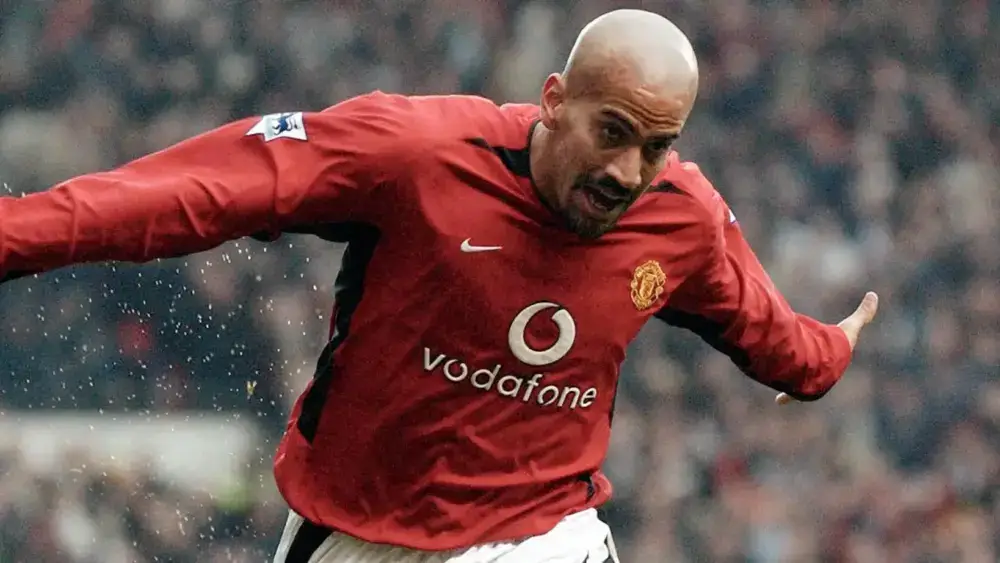
United were eliminated in the Champions League semi-finals by Bayer Leverkusen, on the away goals rule.
This was considered a missed opportunity for Ferguson, since the final that season was being held in his birthplace, Glasgow.
Much of the criticism focused on Verón.
British media reported dissatisfaction within the squad and claims that the Argentine was preparing to return to Lazio.
Ferguson categorically denied these reports.
Repeatedly asked about Verón’s form, the Scottish manager lost his patience and exploded at journalists.
“It’s total nonsense, lies. Verón is an exceptionally good footballer. You are all idiots!” Ferguson declared, also using harsh language.
He then asked the journalists to leave the press conference.
The public defense of the Argentine was unusual even by Ferguson’s standards, as he was known for his strained relationship with the media.
However, the team’s form did not improve.
In the decisive match against Arsenal, Verón left the pitch injured in the 58th minute, shortly after Sylvain Wiltord had scored the goal that gave the title to Arsène Wenger’s side.
United finished the season in third place and remained without a trophy.
Verón himself later described the first season as a “disaster.”
The second season and a return of quality in midfield
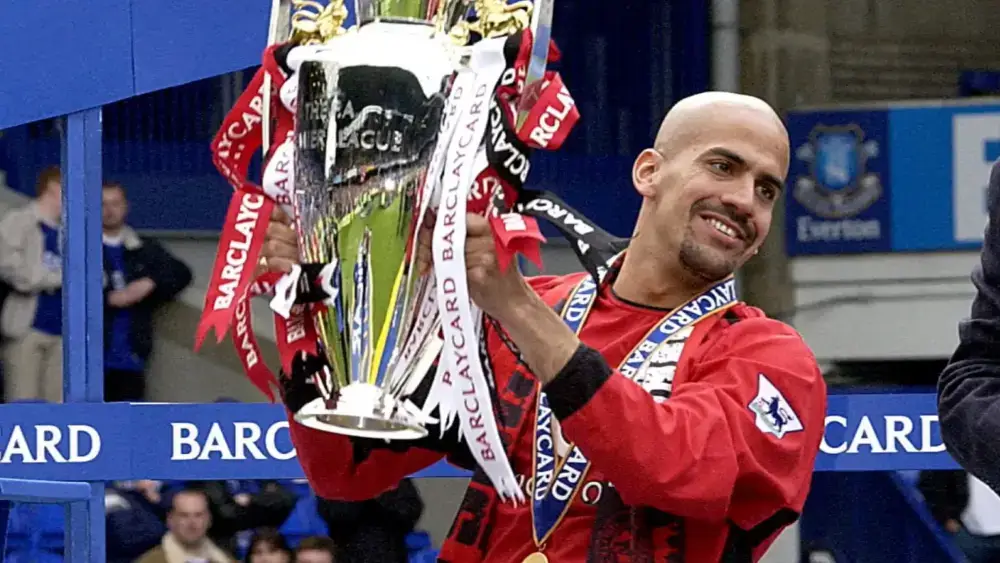
The situation improved during the 2002/03 season.
Manchester United signed Rio Ferdinand from Leeds United, strengthening the defense, while the arrival of Carlos Queiroz as assistant manager brought changes to the tactical organization.
The 4-5-1 system gave Verón more space to control the tempo and organize attacks from deep.
The Argentine also took on greater responsibility because of Roy Keane’s absence, as Keane was recovering from a hip operation.
In the Champions League, Verón recorded four goals and three assists during the group stage.
He scored an elegant goal against Olympiacos and another with a volley from distance in the 2-0 win over Bayer Leverkusen.
“Juan seems inspired by European football. He enjoys it. His coordination when striking the ball was extraordinary,” Ferguson said after the match.
In December, Verón scored an important goal in the 2-0 win over Arsenal and struck a spectacular penalty against West Ham.
He also provided a memorable assist for David Beckham against Birmingham City.
Ferguson mentioned that moment in his autobiography, published in 2013.
“He struck the ball with the outside of his foot, without taking a run-up, and the pass curled around the defense. Beckham followed the ball and put it over the goalkeeper. At certain moments, Verón could be sublime,” Ferguson wrote.
The night against Juventus, the peak of his time at United
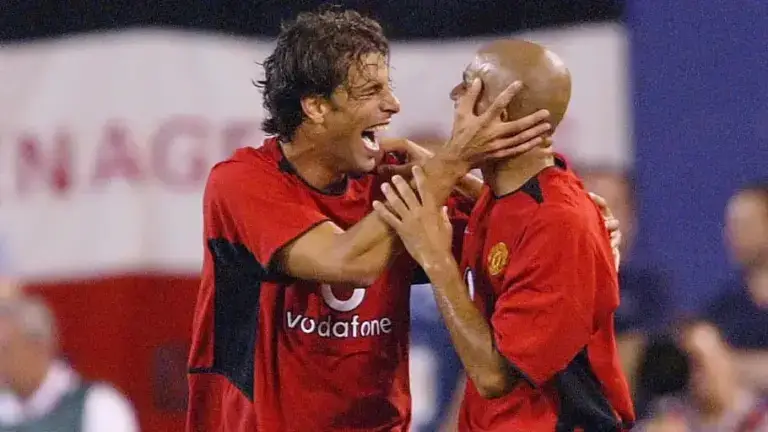
Manchester United managed to return to the highest levels during the 2002/03 season.
The team reached the final of the League Cup, where it was beaten 2-0 by Liverpool, and also secured its place in the Champions League quarter-finals.
One of the best matches of the season was the 3-0 win over Juventus in Turin.
Ryan Giggs scored two goals, while Ruud van Nistelrooy scored the third.
However, Verón was one of the main protagonists of the match.
He assisted Giggs’s first goal and controlled the tempo of the game, dominating against Juventus’s well-known midfielders, Pavel Nedvěd and Edgar Davids.
For many observers, it was the Argentine’s best performance in a Manchester United shirt.
That evening, the Delle Alpi stadium became the stage where Verón displayed his full technical repertoire.
The title, and an unexpected end
Despite good performances in Europe, Verón continued to struggle to maintain the same level in the Premier League.
In March, he suffered an ankle injury against Leeds United.
Ferguson brought him back for the second leg of the Champions League quarter-final against Real Madrid.
United won 4-3, but were eliminated on aggregate, 6-5.
That turned out to be the last match Verón started for the club.
The Argentine missed eight of the last nine league matches, while United won eight of them and drew 2-2 with Arsenal.
The team recovered a gap of eight points and won the title.
The fact that United finished the season so strongly without Verón did not improve perceptions of him.
However, he had contributed to the team’s success, making 25 Premier League appearances and rightfully earning a championship medal.
The Chelsea transfer and the clash with Ferguson
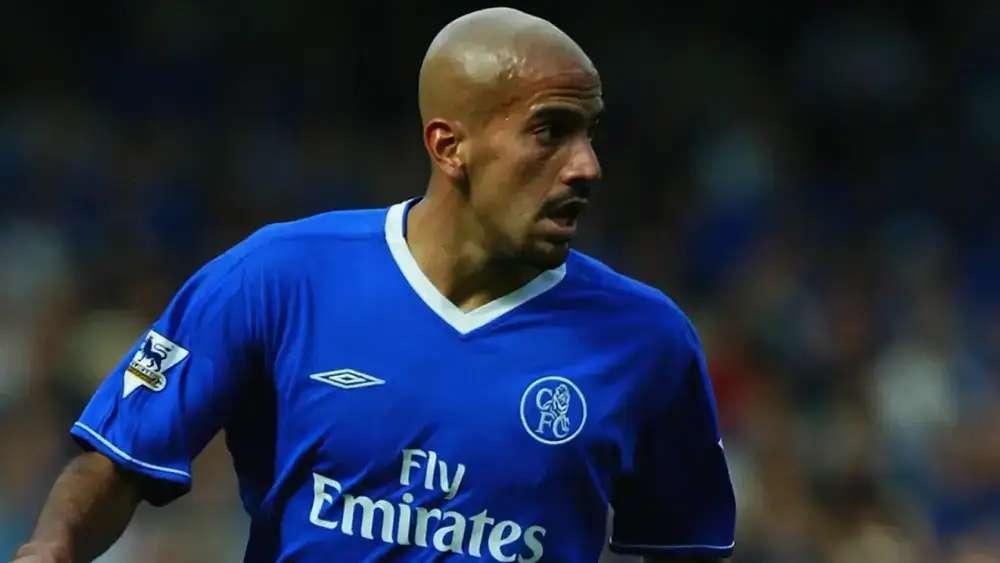
In the summer of 2003, Verón’s future became one of the main topics in the British media.
Chelsea were interested in signing him, and a deal worth around £15 million was reported.
However, the Argentine continued to play well during Manchester United’s pre-season tour of the United States.
In the 4-1 win over Juventus in New Jersey, he provided two assists and was among the best players on the pitch.
Ruud van Nistelrooy rated him highly after the match.
“Seba was the best player on the pitch. He never lost the ball, all his passes were accurate, and the assist for my goal was absolutely brilliant,” the Dutch striker said.
Ferguson also publicly insisted that Verón would stay.
“Seba is a marvelous player. He has extraordinary imagination, always asks for the ball and has great energy. Tonight he was fantastic,” the coach said.
However, less than a week later, the Argentine signed a four-year contract with Chelsea.
Verón later claimed that Ferguson’s attitude changed as soon as the club received an attractive financial offer.
“Ferguson was not sincere with me. Two months earlier he had told me I was not for sale. But when the offer came, the conversation changed,” he said.
According to the Argentine, this was the decisive point that led him to leave.
Ferguson rejected the claims, saying the player had been informed of the situation and that the club had many options in midfield.
Chelsea, an even harder adventure
If the period at Manchester United was considered disappointing, the spell at Chelsea proved even more problematic.
Under Claudio Ranieri, Verón made only 14 appearances in all competitions during the 2003/04 season.
He scored one goal, on his debut against Liverpool, but a back injury kept him out of action for about five months.
The Argentine also experienced a traumatic event away from football.
At his home in London, an armed robber threatened him, his partner and their children with a dagger during a robbery in which items worth around £60,000 were taken.
Verón never settled into life in the English capital, and after only one season he was loaned to Inter.
Years later, he admitted that leaving Manchester United was one of the decisions he regretted.
“There are very few things I regret, but one is leaving Manchester. Former teammates kept telling me I should have stayed. Today I think they were right,” he said in 2019.
In another interview with FourFourTwo, in 2021, the Argentine said he had found it harder to live in London than in Manchester.
“I would have liked to stay longer at United. I believe I could have done things differently and would have had more consistency on the pitch,” he said.
Ferguson admitted he never found the ideal position for him
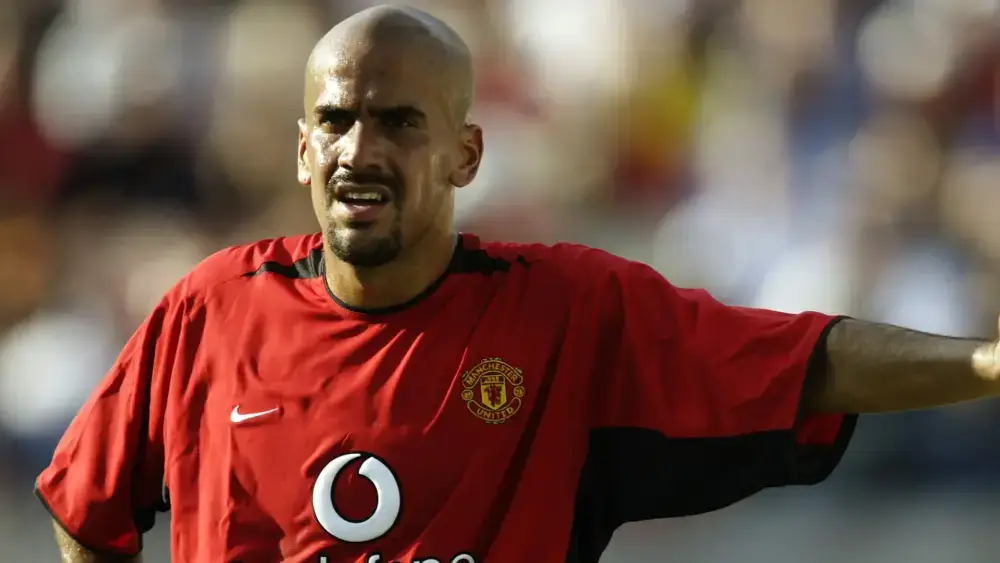
Despite earlier disagreements, Verón did not hold on to negative feelings toward Ferguson.
He acknowledged that he had not been able to consistently maintain the level expected of him.
“In some matches I gave him what he wanted, but in others I did not. If you want to be a great footballer, you have to be consistent. I did not manage to do that at Old Trafford,” the Argentine said.
For his part, Ferguson also admitted in his autobiography that he had not found the best way to use the midfielder.
“Verón was an individualist. He played everywhere, went wherever he wanted. Even if I managed him for a hundred years, I still would not know exactly where to put him,” the manager wrote.
According to him, the Argentine had exceptional quality but did not fit naturally into the tactical structure of the team.
Roy Keane and another reason for the difficulties
Several former teammates have offered different explanations for Verón’s failure at Manchester United.
Nicky Butt believed the Argentine had not fully understood the club’s culture and demands.
“He was a fantastic guy and an incredible footballer, but he did not understand what it meant to play for United. He could not handle the pace. The fans wanted intensity and fight, not just technical passing,” Butt said.
Rio Ferdinand, meanwhile, suggested that the presence of Roy Keane may have affected the midfielder.
“I think his problem was Roy Keane. Not because Roy was at fault, but his personality was very dominant,” Ferdinand said in 2022.
Keane himself admitted he had been too demanding of the Argentine.
“I was too harsh on Seba and I was wrong. When he arrived, I expected miracles. When they did not happen, I always focused on his mistakes,” the Irishman had said in 2006.
A footballer ahead of his time?
In hindsight, Verón’s story at Manchester United can be understood differently from the way it was judged at the time.
The Argentine was a playmaker who needed freedom of movement, control of the tempo and the chance to build attacks from different positions.
But Manchester United was built on the traditional 4-4-2 system, with more defined roles and high physical demands.
Ferguson needed Verón to adapt to the existing structure, while his talent required a different tactical organization.
With the later spread of 4-3-3 and 4-2-3-1 systems, European football began to give creative midfielders more freedom.
Former United captain Gary Neville believes Verón would have enjoyed much more success in modern football.
“The way Seba played was very similar to what some midfielders do today, like Bruno Fernandes,” Neville told Sky Sports in 2020.
“Football has evolved. Today players can move into different positions and the systems are much more flexible.”
According to Neville, the problem was not the Argentine’s ability, but the mismatch between his style of play and United’s tactical structure.
“He came with a different way of thinking about positions and movement, into a team that had set patterns. That was the reason it did not work. It had nothing to do with his quality. He was a brilliant footballer,” Neville concluded.
A football master who was not fully understood in England
Juan Sebastián Verón left Manchester United in 2003, after two seasons that produced brilliant moments but also great disappointments.
In 82 Premier League appearances, he scored 11 goals, while his transfer continues to be cited in discussions about signings that failed to meet expectations.
However, defining his career at Old Trafford solely as a failure would be an incomplete assessment.
Verón showed in many matches that he had vision, technique and rare creative ability. He shone in the Champions League, won the Premier League title, and delivered passes that remain among the finest moments of his career.
But individual talent was not enough to overcome the tactical difficulties, physical problems and extraordinary expectations that came with his transfer.
Juan Sebastián Verón may not have become the legend that Sir Alex Ferguson had imagined, but his story remains a telling example of how even the most talented footballers can fail when the system does not manage to make use of their qualities. In many ways, the Argentine was a modern organizer of the game, who arrived in the Premier League before English football was ready for him.
Originally published in Albanian on Reporteri.net. We use AI to help translate and publish our articles, and every article is reviewed by our editors.