







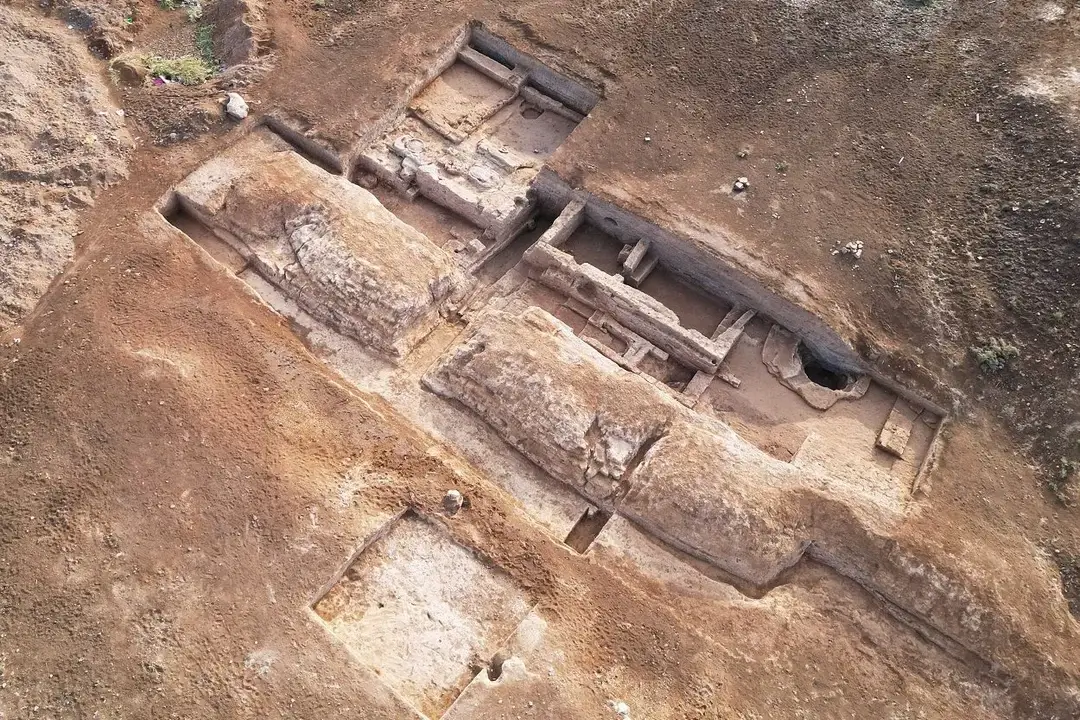
Archaeologists working at Tell Muhammad in Baghdad, Iraq, have uncovered new evidence of everyday life in ancient Mesopotamia.
The excavation site belongs mainly to the era of the Babylonian king Hamurab, around 2000 to 1600 BCE.
Recent digs have revealed ancient fortifications and two gates, as well as an area believed to have been used to produce bread and possibly beer.
“We uncovered an area for producing bread and possibly beer, because at the excavation site we found a tablet that refers to a person who took barley and made beer, specifically a beer called ‘kurun’, which was very important in Mesopotamia. We are still in the process of translating this tablet,” said Nicola Aneri, a professor of archaeology at the University of Catania in Italy.
These findings are part of excavations that began in 2022. A new archaeological park now allows visitors to explore the site, while local and international partners work to preserve Baghdad’s cultural heritage and promote tourism.
Originally published in Albanian on Reporteri.net. We use AI to help translate and publish our articles, and every article is reviewed by our editors.








