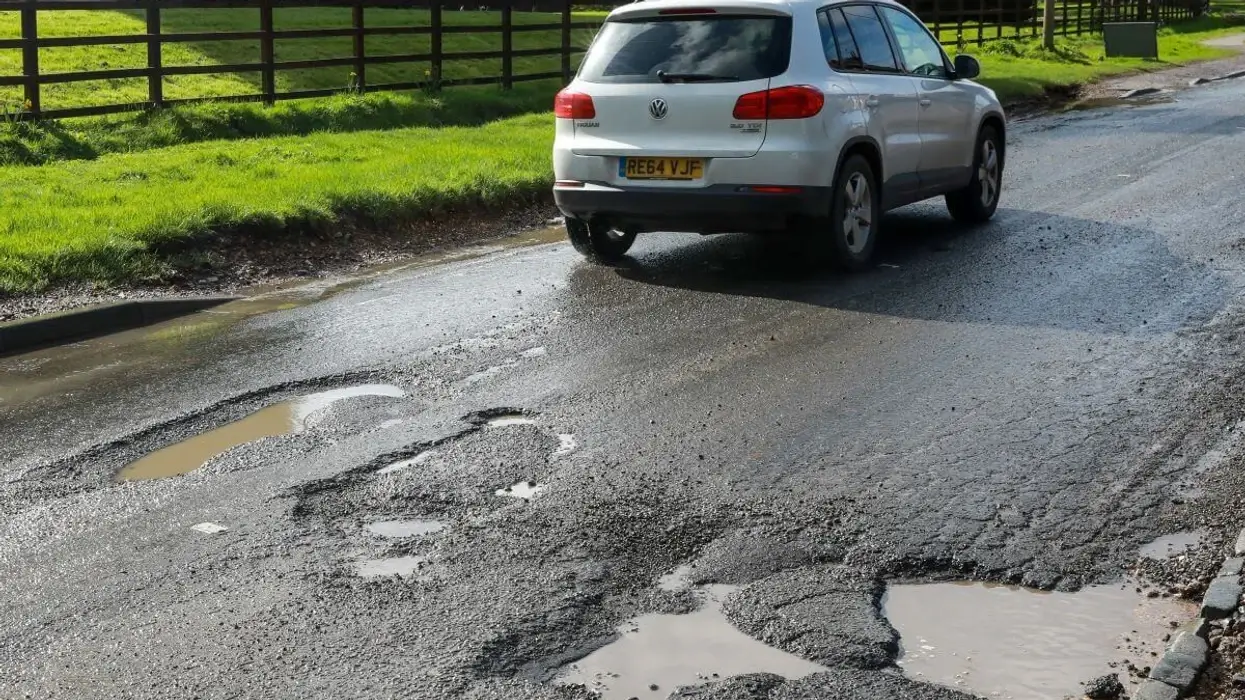
Potholes are a serious problem for drivers, especially in autumn and winter, when rain, snow and low temperatures further damage the asphalt.
A single hard hit on a pothole is enough to damage a tire, bend a rim or harm part of the suspension system.
However, experts say that the way you drive and the choice of tires can significantly reduce the risk of costly repairs.
Craig Sprigmore, retail sales director at Goodyear, explains that tire quality can play an important role in protecting a vehicle, but warns that no tire is completely immune to damage caused by poor road conditions.
According to him, when a wheel hits a pothole at high speed, a large force is concentrated on a very small area of the tire. Depending on the vehicle’s speed and the angle of impact, the internal reinforcements that give tires their strength and allow them to keep their proper shape can be damaged.
Such damage is sometimes not immediately visible, but it can seriously compromise safety when driving further.
How Should You Drive Over a Pothole Correctly?
The best way to avoid damage is for the driver to spot the pothole in time and steer around it safely. However, this is not always possible, especially when traffic is heavy or the road is covered with water.
For this reason, experts advise driving more slowly on damaged roads and keeping a large enough distance from the vehicle ahead. This way, the driver has more time to notice the obstacle and react.
If it is not possible to avoid the pothole, it is recommended to reduce speed before reaching the damaged section of the road and to release the brake immediately as you cross the pothole, if it is safe to do so. The reason is simple: hard braking at the moment of impact puts extra pressure on the front suspension and can increase the risk of damage.
It is also important that the steering wheel stays steady and the wheels point straight ahead as you cross the pothole. A sharp turn at the last moment can be far more dangerous than the impact itself, especially if there is another vehicle in the adjacent lane.
Experts from the U.S. Department of Transportation in the state of Michigan also advise drivers that, when a safe swerve is not possible, they should slow down, keep the wheels straight and let the car roll over the damaged part of the road in a controlled manner.
Do More Expensive Tires Offer Better Protection?
Sprigmore stresses that premium tires often have better internal construction, stronger reinforcements and more resistant rubber compounds. Some models have additional reinforced sidewalls that can better withstand unexpected impacts.
However, this does not mean that every more expensive tire is automatically more resistant to potholes than a cheaper one. Resistance depends on the specific model, size, construction, the condition of the tire and the strength of the impact.
Beyond damage resistance, tire choice also affects the car’s braking behavior, especially on wet asphalt.
Experts stress the importance of correct tire pressure. A slightly underinflated tire can deform more during an impact, while excessive pressure is not desirable either. It is therefore important to stick to the values recommended by the car manufacturer.
If the car hits a pothole hard, the driver should check the condition of the tires and rims as soon as it is safe to stop. Special attention should be paid to cuts, bulges on the sidewalls of the tires and possible loss of pressure.
If after the impact the steering wheel vibrates, the car starts pulling to one side, or an unusual noise is heard from the wheel area, the vehicle should be checked at a service center.
Originally published in Albanian on Reporteri.net. We use AI to help translate and publish our articles, and every article is reviewed by our editors.