







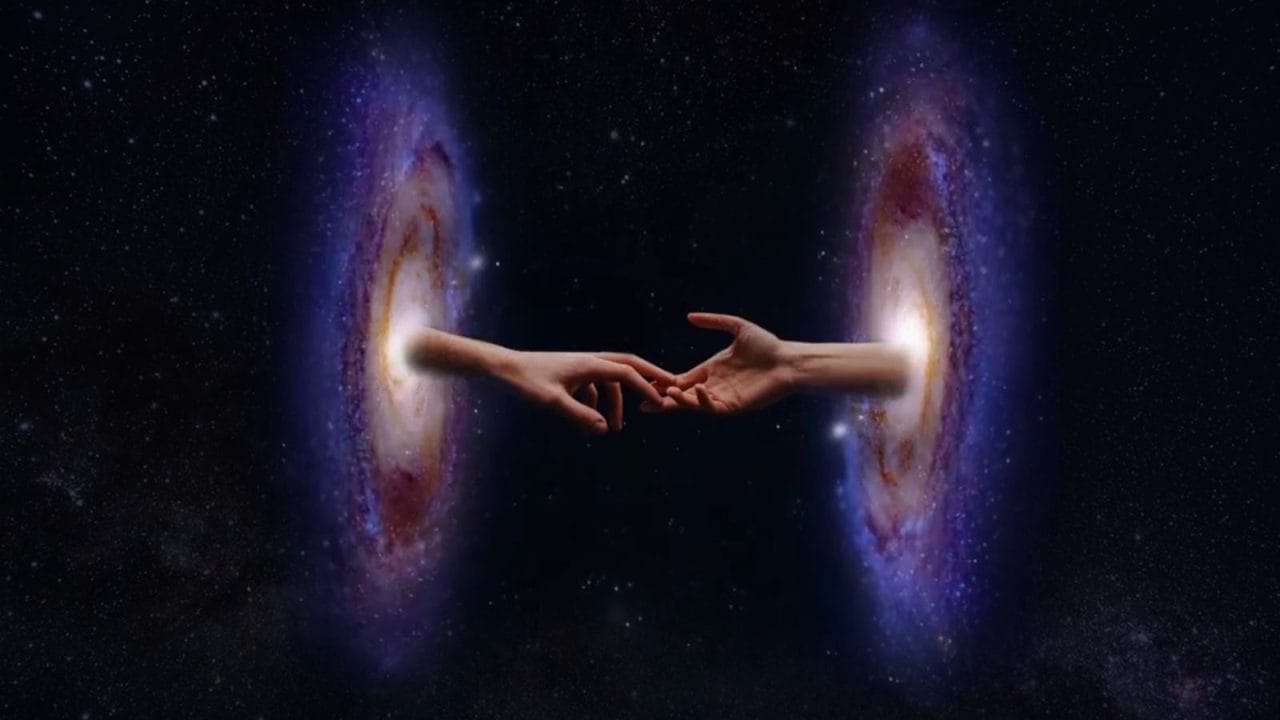
Jung described synchronicity as a phenomenon in which an external event coincides in a meaningful way with a person’s inner psychological state, even though it is not possible to find the usual cause-and-effect relationship between them.
It happens to almost everyone. You think about a person you have not seen in years, and a few minutes later you receive a message from them. You are talking about a book you have wanted to read for a long time, and that very day someone unexpectedly gives it to you. Or you are about to make an important life decision, and the same word, symbol or theme begins to appear in places that seem unrelated. Most people would call it a simple coincidence, but Swiss psychiatrist Carl Gustav Jung had a special name for such experiences: synchronicity.
As Jung Page writes, Jung described synchronicity as a phenomenon in which an external event coincides in a meaningful way with a person’s inner psychological state, even though it is not possible to find the usual cause-and-effect relationship between them.
In other words, one event did not cause the other. For the person experiencing them, however, their connection seems so striking that it is hard to dismiss it as a completely trivial coincidence.
Dream of a Golden Scarab
One of the most famous stories Jung used to explain synchronicity involves one of his patients. According to his description, she was extremely rational, and Jung believed that this rigid way of thinking was blocking her progress in therapy.
During one session, she told him about a dream in which she had received an expensive piece of jewelry shaped like a golden scarab. Just as she was describing the dream, Jung heard a tapping at the window. He went over and saw a golden beetle, a type of beetle that resembles a scarab. Jung brought the insect to her, linking it with the scarab from her dream.
According to his account of the case, that remarkable moment had a strong effect on the patient and helped break down her earlier resistance to therapy, Psychology Today reports.
For Jung, it was a key example of what he called “meaningful coincidence.” He did not claim that the dream caused the insect to appear. The question that intrigued him was whether an inner experience and an outside event could be connected through meaning rather than cause.
Jung did not consider synchronicity only in passing. He explored the idea for more than 20 years, and in 1951 he spoke about it at the Eranos conference. A year later, his famous work “Synchronicity: An Acausal Connecting Principle” was published. Physicist Wolfgang Pauli, a Nobel Prize winner in Physics, played an important role in developing these ideas, and Jung exchanged ideas with him for many years.
In 1952, their works were published together in the book “The Interpretation of Nature and the Psyche.” Jung tried to build a broader framework for thinking about the relationship between the psyche and the material world. However, his ideas about synchronicity never became an accepted scientific mechanism for proving that seemingly unrelated events are truly connected by a hidden link, Jung Page writes.
Explanations from Modern Psychology
Modern psychology also offers far more practical explanations. The human brain is extremely good at recognizing patterns. This is exactly the ability we need to understand the world, predict events and connect information. However, the same system can make us remember certain coincidences vividly, while we simply forget thousands of moments when nothing interesting happened.
For example, during a given week we may think of dozens of people who never reply to us. That does not stay in our memory. But if after years of silence we think of an old friend and he calls us five minutes later, we are very likely to remember that event for a long time.
Confirmation bias may also play a role. This is the tendency to notice and remember more easily the information that matches our existing expectations or beliefs. Psychology Today states that most scientists attribute synchronicity to chance and to the way the human mind recognizes meaning and patterns, rather than to evidence of some hidden force linking events.
Meaning Is Real
So, is synchronicity just a coincidence? This is where the most interesting part of Jung’s idea lies. Even if a coincidence has no supernatural cause, the meaning a person gives it can be very real. An unexpected meeting can push us to make a decision we have postponed for months. A song we happen to hear can bring back a memory of someone we lost. An unusual match can make us reflect on our desires, fears or relationships.
In today’s popular spirituality, synchronicity is often interpreted as a “sign from the universe,” a confirmation that we are on the right path, or a message that we should pay attention to something in our lives. There is no scientific evidence for such a supernatural explanation. Jung’s original concept was more complex than today’s online interpretations, according to which every repeated number or unusual coincidence must carry a hidden message.
Perhaps this is why the most important question is not whether “psychology is new to you.”
“The universe” sent a person, a song or an event at a certain moment. The more interesting question may be why this particular coincidence matters so much to you.
That is why synchronicity remains an attractive idea more than half a century after Jung’s death.
It sits at the border of psychology, philosophy and spirituality. Science does not confirm that coincidences are linked by some invisible force, but it does show how strong the human need is to look for meaning in them, and how real that meaning feels.
Originally published in Albanian on Reporteri.net. We use AI to help translate and publish our articles, and every article is reviewed by our editors.








