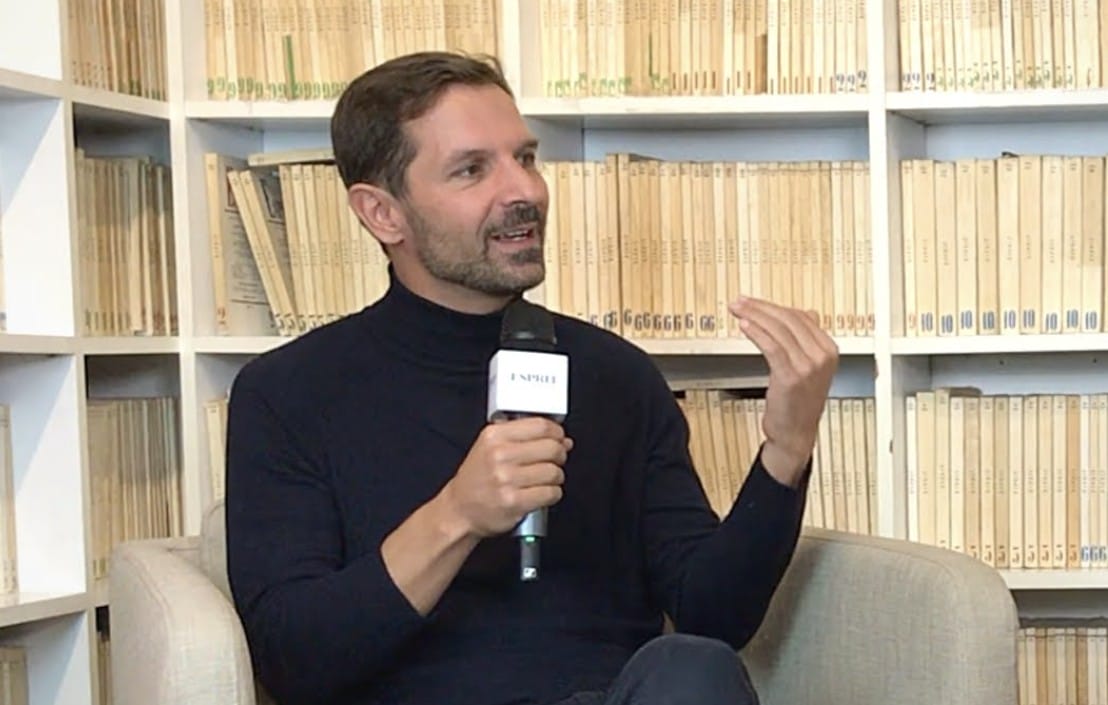
A routine visit to your mother, help with using her phone, or a simple conversation may carry a much deeper meaning than we think. French philosopher Maxime Rovère offers another way of looking at the relationship between mother and child, arguing that it should rest not on a sense of debt or guilt, but on love and an awareness of the continuity of life. In an interview with the French newspaper Le Monde, philosopher and scholar of Spinoza’s work Maxime Rovère discussed his book Parler avec sa mère (Talking to Your Mother), in which he examines the relationship between parents and children from a philosophical perspective. According to him, the relationship with one’s mother is often weighed down by social expectations, feelings of guilt, disappointment, and the belief that children owe their parents for everything they have done for them. He proposes instead that this relationship be seen as part of a much larger process, one connected to human existence and the continuity of humanity.Why can a visit to your mother be a metaphysical gift? Rovère takes as an example the ordinary visits that adult children pay to their mothers. These visits often involve practical tasks, such as fixing a phone, help with paperwork, or solving everyday problems. At first glance, these actions may seem trivial, even tiring at times. But, according to the philosopher, they take on a completely different meaning once we understand that the relationship between mother and child is part of the continuity of life. The presence of an adult child is proof that he has survived, grown, and continues to live, despite the hardships or mistakes that may have occurred during his upbringing. In this way, the visit becomes a mutual gift: the child gives his mother his presence, while both become part of an experience that goes beyond everyday family concerns.Children do not owe their parents for love Another issue the philosopher addresses is the sense of obligation that many children feel toward their parents. He challenges the idea that parental love and care should be considered an investment that children are obliged to repay later. According to him, what is given out of love should not expect a reward. On the contrary, when parental care is understood as an unconditional gift, it can foster an equally free and mutual love. Rovère also argues that guilt can create the impression that a debt exists toward parents, even when the relationship should rest on love rather than obligation.Mothers should not expect their children to fulfill their dreams The philosopher also addresses difficult family relationships, particularly cases in which mothers put emotional pressure on their children. He explains that personal disappointments and social pressure can push some mothers to project their unfulfilled expectations onto their children. However, according to him, children are not born to fulfill their parents’ wishes. Mothers should be able to build a life that brings them satisfaction, without tying their happiness to the success or choices of their children. Instead of seeing their grown children as responsible for their happiness, he suggests that parents view them as individuals who continue to develop and forge their own path in life.The connection with nature can also be found within the family Drawing on the thought of Pythagoras and the concept of the cosmos, Rovère places the relationship between mother and child in a broader context that includes birth, aging, death, and the continuity of species. He argues that people often seek extraordinary experiences to feel connected to nature, traveling to distant places or admiring majestic landscapes. But a similar experience, according to him, can also be found in the most ordinary human relationships. A visit to one’s mother, a conversation, or a simple moment spent together can make us aware of our connection to the generations that came before us and those that will follow. For the French philosopher, this does not require any mystical experience or special ritual, but attention and genuine presence in everyday relationships. From this perspective, the love between mother and child is not only a private relationship, but also a way of experiencing the continuity of life. /Reporteri.net
Originally published in Albanian on Reporteri.net. We use AI to help translate and publish our articles, and every article is reviewed by our editors.