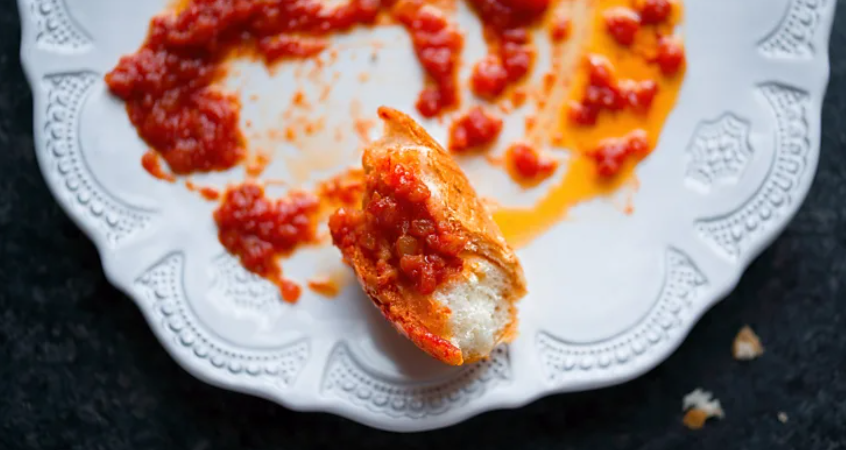
Once considered improper at elegant tables, this beloved Italian habit now symbolizes the pleasure of savoring food down to the very last bite.
In many Italian families, bread is never missing from the table. It accompanies the meal, but it also has a special role at the end: it gathers the leftover sauce on the plate and soaks up olive oil and salad vinegar, so nothing goes to waste.
The habit has its own name in Italy: fare la scarpetta, which translates literally as “to make the little shoe.” The expression refers to using a piece of bread to collect the last of the sauce from the plate.
But how did a habit once viewed with disapproval in some social circles become a gesture performed proudly today, even in elegant restaurants?
The origin of the name remains unclear
Several theories circulate about the origin of the expression scarpetta. According to one, the bread resembles a small shoe. According to another, the name is linked to great hunger, which leads a person to leave nothing uneaten.
However, Italian food historian Luca Cesari stresses that there is no strong evidence supporting these explanations. According to his research, one of the earliest written references to the expression dates to 1871, in a Roman magazine.
From family habit to fine restaurants
For Italians, la scarpetta is not simply a way to finish a meal but also an expression of enjoyment and appreciation for the food.
Attitudes toward the habit, however, vary by region and family tradition. In Turin, for example, cook Gaia Enria recalls that her parents would scold her when she did it, as it was considered bad manners at the table.
In the southern region of Puglia, by contrast, finishing every bite is seen as a sign of respect for the food and a way to avoid waste.
Today, la scarpetta is increasingly accepted even in restaurants, bridging the gap between the family table and traditional rules of dining.
Ultimately, this ritual carries a simple message: when the food is good, every drop of sauce deserves to be savored to the end.
Originally published in Albanian on Reporteri.net. We use AI to help translate and publish our articles, and every article is reviewed by our editors.