







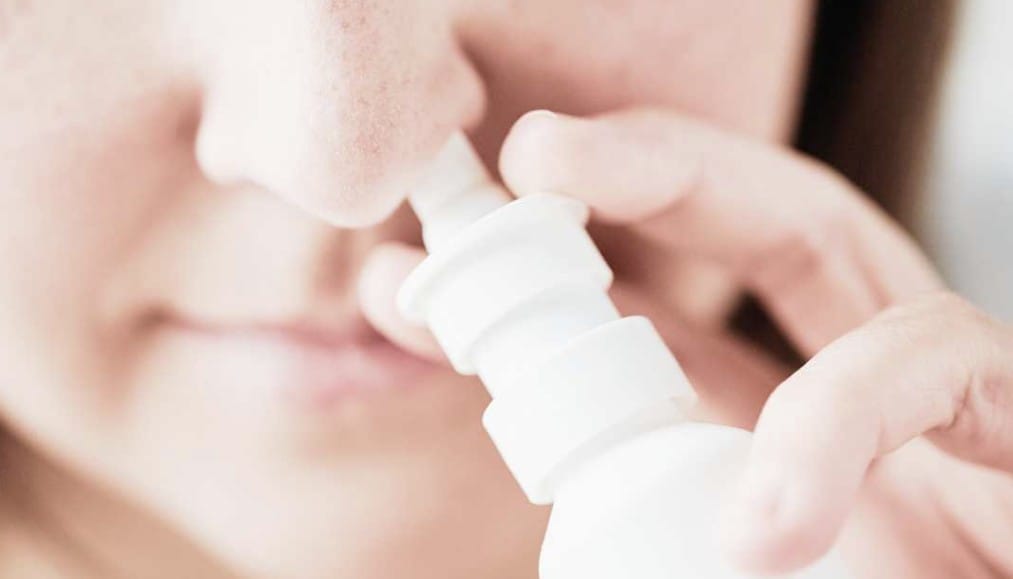
A new scientific discovery in the United States has opened the possibility of fighting brain aging and memory decline with a simple nasal spray. In experiments on aged mice, just two doses of the treatment significantly reduced inflammation in the brain and improved memory function, with effects lasting for months.
Researchers at Texas A&M University have developed an experimental therapy that targets one of the biological processes linked to brain aging: chronic inflammation that gradually damages the function of nerve cells.
The results of the study, published in the scientific journal Journal of Extracellular Vesicles, suggest that some changes linked to brain aging may be reversible.
However, scientists stress that the treatment has so far been tested only in animals and has not yet been proven to work in humans.
How does the spray that targets brain aging work?
As people age, a chronic inflammatory process can develop in the brain, known in science as neuroinflammaging.
This process particularly affects the hippocampus, the part of the brain that plays a key role in memory and learning.
Ongoing inflammation is linked to declining cognitive function and is considered one of the factors that may contribute to the development of neurodegenerative diseases, including Alzheimer’s disease.
The research team, led by Professor Ashok Shetty, developed a spray containing microscopic biological particles called extracellular vesicles.
These particles, produced by human neural stem cells, carry small regulatory molecules called microRNAs.
When administered through the nose, they can reach brain tissue and influence the cellular mechanisms that cause inflammation.
Just two doses produced results that lasted for months
During the experiment, researchers used aged mice, which were given two doses of the therapy.
The results showed that the treatment had significantly reduced brain inflammation and improved the function of mitochondria, the structures that produce the energy cells need.
The improvements were not limited to the cellular level.
In behavioral tests, the treated mice showed a better ability to recognize familiar objects, identify new objects and detect changes in their surroundings.
According to the researchers, the effects appeared within a few weeks and continued for months.
Similar results were observed in both male and female mice.
Scientists: Brain aging may not be irreversible
Professor Ashok Shetty, who led the study, believes the results could change the way science approaches brain aging.
According to him, the goal is not simply to extend life, but to preserve people’s mental abilities and independence in later years.
The researchers hope such a therapy could help slow the decline of memory in the future and lead to new treatments for neurodegenerative diseases.
Another possibility under consideration is using this technology to restore brain function after strokes.
However, these remain research prospects and not clinically proven uses.
Can the spray be used in people?
Despite the promising results, the spray is not yet an approved medicine for use in people.
The study was conducted in mice, and further research is needed to determine its safety, dosing and possible effectiveness in patients.
The scientists have filed a patent application for the technology, while the research has been supported by the U.S. National Institute on Aging.
If the results are confirmed in future clinical studies, the therapy could offer a less invasive way to treat some problems linked to brain aging.
The discovery does not mean that scientists have already found a way to reverse brain aging in people. But it provides early evidence that some of the biological mechanisms behind memory decline can be targeted and potentially improved.
Originally published in Albanian on Reporteri.net. We use AI to help translate and publish our articles, and every article is reviewed by our editors.








