







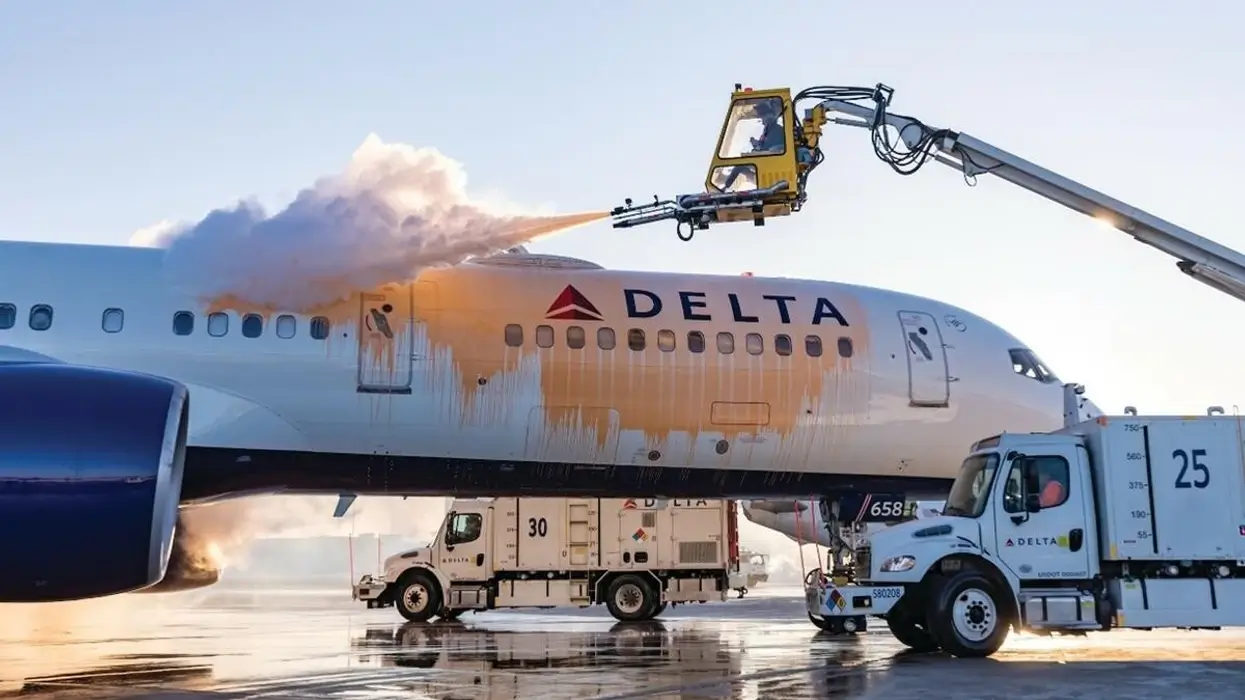
During cold winter days, a fascinating process can be seen at airports around the world: planes are sprayed with a special fluid before they set off for their destinations.
This procedure, known as de-icing and anti-icing, is one of the most important safety measures in aviation. It aims to remove ice, snow and frost from the surfaces of the aircraft, as well as to prevent them from forming for a limited period of time.
According to the U.S. Federal Aviation Administration (FAA), the fluids used in this process usually contain glycol, water and other ingredients that help melt ice and protect the aircraft’s surfaces from repeated freezing.
But why is this procedure so important?
A thin layer of ice on an aircraft’s wings can disrupt the way air flows around them and prevent the creation of the lift needed for flight.
For this reason, before departure, specialized crews inspect the aircraft’s surfaces and, when conditions require it, use special fluids to remove and prevent frost.
There are several types of these fluids. Some are applied heated to melt ice and snow, while others have thicker formulas that create a protective layer preventing frost from forming for a certain period of time.
This protection does not last indefinitely, so aircraft must take off within the specified protection window, depending on weather conditions and the type of fluid used.
So when you see a plane being sprayed with a special fluid in winter, it is an important procedure that helps ensure the conditions needed for a safe flight.
Originally published in Albanian on Reporteri.net. We use AI to help translate and publish our articles, and every article is reviewed by our editors.








