







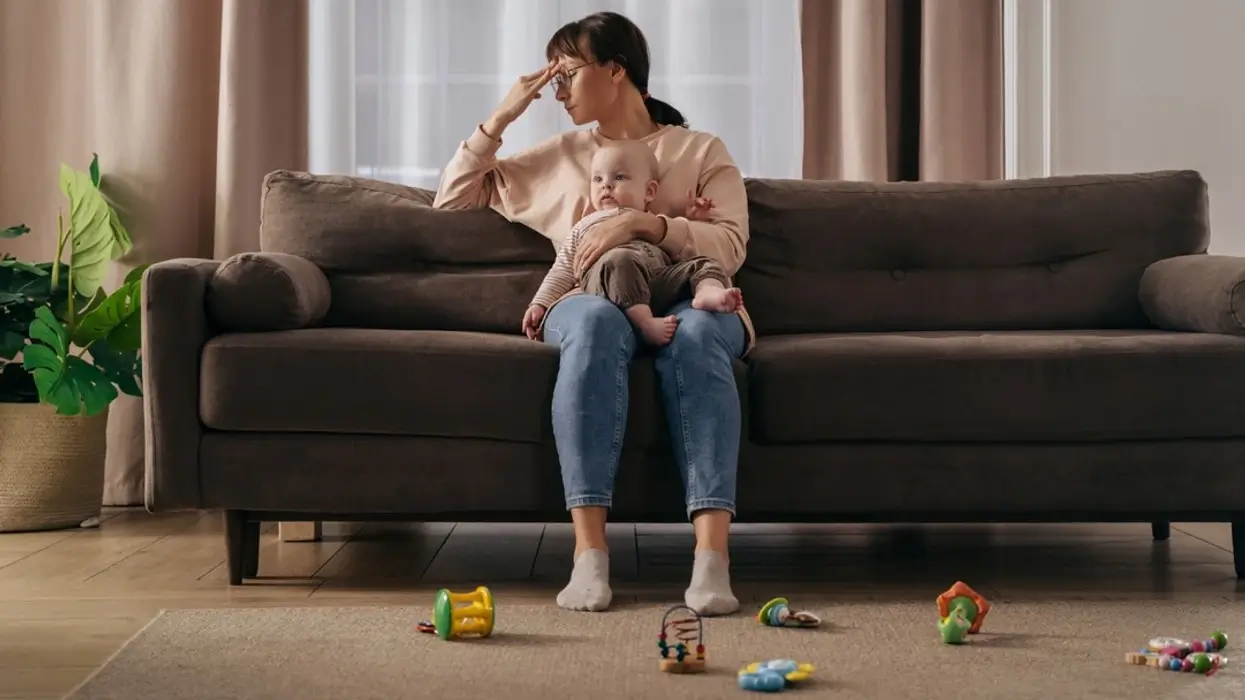
The first months after a child is born are often portrayed as the most beautiful time of life, but the reality for many mothers can be completely different.
A new study in the United Kingdom has found that four in five mothers experience mental health symptoms, some of which resemble those of post-traumatic stress disorder (PTSD).
According to data from the parenting platform ChatMum.co.uk, half of them conceal their true condition out of fear of being judged.
The survey, conducted with more than 2,000 parents, shows that 96% of respondents experienced major changes in their lives after their child arrived.
Meanwhile, 58% say they feel like completely different people from the period before they became parents.
The difficulties do not affect mothers alone, as seven out of 10 fathers admit they experienced emotional shock after the birth of their child.
Experts describe this experience as ‘baby shock’, an emotional reaction that can involve extreme fatigue, emotional numbness, crying, a sense of detachment and difficulty adjusting to the new reality.
In some cases, symptoms can be more severe and include disturbing thoughts, depression or even experiences similar to trauma.
According to professionals, childbirth can trigger strong psychological reactions, especially when it is accompanied by pain, fear for the life of the mother or baby, and a sense of helplessness.
Even after labor ends, the nervous system can remain in a state of alarm, causing constant tension, insomnia and difficulty forming an emotional bond with the child.
Another possible consequence is the unexpected return of traumatic memories, known as ‘flashbacks’.
Sounds, smells or certain situations can bring mothers back to their experience of giving birth, and some of them may find it difficult to return to the hospital where they delivered.
Experts stress that these difficulties are not necessarily linked only to difficult or traumatic births.
They can also appear after a birth that seemed to have gone normally, while previous traumatic experiences and a lack of support can make the condition worse.
For this reason, professionals call for postpartum emotional difficulties not to be minimized, and for mothers to have more room to speak openly about what they are going through, without fear of judgment.
They emphasize that the arrival of a child can be both a beautiful experience and an extremely demanding change for the physical and emotional health of parents.
Originally published in Albanian on Reporteri.net. Translated from Albanian with the help of AI.








