







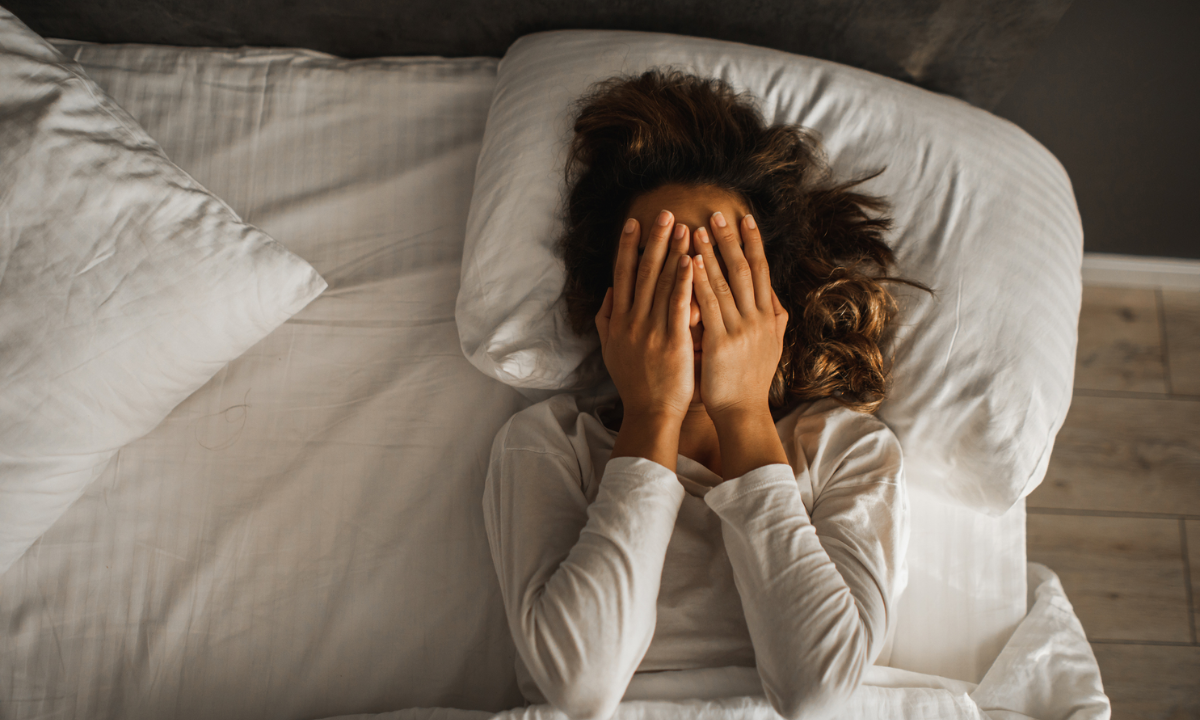
Studies show women have more sleep problems than men. But why does this happen?
If you constantly feel tired while your partner sleeps soundly all night, know that it is not just a coincidence.
Science shows that women have more difficulty falling asleep, wake up more often during the night, and often feel tired even after sleeping for several hours.
According to a study called the Global Sleep Survey 2025, around 38% of women have trouble falling asleep at least three nights a week, compared with 29% of men.
Here are the three main reasons:
1. Women suffer from sleep disorders more often
Women have more problems with insomnia and often have lighter sleep, waking several times during the night.
Some data show that:
33% of women need more than 30 minutes to fall asleep, compared with 23% of men.
31% of women wake up several times during the night, versus 16.7% of men.
Women more often have nightmares and disturbing dreams.
Another problem is restless legs syndrome. It causes a prickling, uneasy or painful feeling in the legs, especially in the evening, making it hard to sleep.
Sometimes this is also linked to iron deficiency in the body, which can develop because of blood loss during menstruation.
2. Hormones have a major effect on sleep, from menstruation to menopause
One of the main reasons why women’s sleep changes is the influence of hormones.
Estrogen and progesterone levels change throughout a woman’s life, and these changes directly affect sleep quality.
Before menstruation
Many women notice that before their cycle:
They sleep worse.
They wake up more often.
They feel hot during the night.
They have stranger or more disturbing dreams.
During pregnancy
Especially in the last months, sleep becomes harder because of:
Nausea.
The need to go to the bathroom often.
Heartburn and reflux.
The baby’s movements.
Even after childbirth, mothers lose an average of about one hour of sleep each night for several months, while fathers lose about 15 minutes.
During menopause
In the period before and during menopause, hormonal changes can cause hot flashes and night sweats.
About 80% of women experience hot flashes, and for some of them these are so severe that they interrupt sleep several times a night.
Lower estrogen can also affect breathing during sleep and increase the risk of sleep apnea.
This is a condition in which breathing stops for brief moments during sleep. In women it does not always come with snoring, but it can be accompanied by insomnia, sudden awakenings and morning headaches.
3. Mental load and daily responsibilities
This is one of the most important reasons.
Beyond biological and hormonal changes, women often carry a heavy mental load on their shoulders.
They think about the home, children, work, family, organizing the day and many other things.
Even when they lie down in bed, their minds do not stop.
They start thinking about:
What they need to buy tomorrow.
What work they still have to finish.
What they need to arrange for the children.
Who they still have not gotten back to.
What the next day holds.
This mental overload creates stress and anxiety, making it harder to fall asleep.
Another reason is that many women sleep with part of their mind always on alert. They listen for whether a child wakes up, whether their partner comes home, or whether something happens during the night.
So even when the body is in bed, the brain keeps working.
Originally published in Albanian on Reporteri.net. We use AI to help translate and publish our articles, and every article is reviewed by our editors.








