







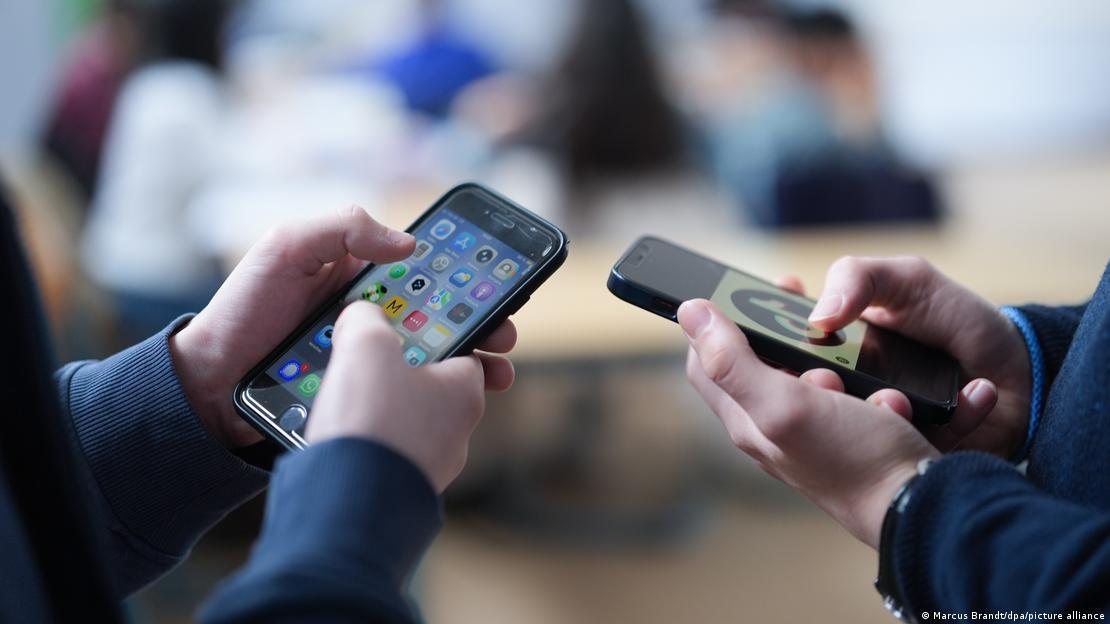
Social media platforms are facing a wave of lawsuits and regulatory pressure over the way their products are designed to keep users online for as long as possible. At the center of the debate are children and teenagers, for whom heavy social media use is linked to concerns about mental health and the development of compulsive behavior.
Social media platforms earn most of their revenue from advertising. For this reason, the longer a user stays in the app, the more opportunities the platform has to show ads.
Endless scrolling, autoplay videos, personalized recommendations and constant notifications are some of the mechanisms designed to boost engagement.
Meta, the company behind Facebook and Instagram, recorded $196.2 billion in advertising revenue last year, illustrating the scale of this business model.
Why are children at the center of the concerns?
Various studies have found links between heavy social media use among teenagers and problems such as anxiety, depression and dissatisfaction with their physical appearance.
Internal Meta documents made public in 2021 also showed that the company’s researchers had identified concerns about Instagram’s impact on body image and the mental health of some teenage girls.
Another example comes from TikTok: according to data from Sensor Tower, American teenagers spent about 90 minutes a day on the platform during 2025.
Legal pressure has increased significantly. In the United States, 29 states, including California, Colorado and New Jersey, have sued Meta, accusing the company of designing its platforms to create dependence among young users.
In a recently reported settlement, Meta agreed to pay up to $18 billion to 47 states, the District of Columbia and U.S. territories. The company also agreed to new measures, including usage limits and overnight blocks on app use for teenagers.
For years, technology has advanced faster than the law. Now, however, governments are trying to set stronger rules. In the United States, the Kids Online Safety Act (KOSA) is being debated. It would provide for stronger safety measures for minors and more control tools for parents.
Meanwhile, countries such as Australia, Indonesia, Brazil and Malaysia have taken steps to restrict children’s use of social media.
Experts argue that platforms should be subject to safety standards similar to those applied to other products that can affect people’s health and well-being.
Could other models work?
One alternative being discussed is subscription-based social media, so that platforms would not depend so heavily on advertising or on the time users spend online.
A 2024 study in Germany found that more than half of adults and about two-thirds of teenagers would be willing to pay for a version of social media with more restrictions and protections.
However, experts remain skeptical that such models could replace the major platforms used today by billions of people.
And now comes the challenge of artificial intelligence
The debate is becoming even more complex because the same companies that control social media platforms are investing heavily in artificial intelligence.
Experts warn that some of the practices that have fostered social media dependence could also appear in new AI products.
Originally published in Albanian on Reporteri.net. We use AI to help translate and publish our articles, and every article is reviewed by our editors.








