




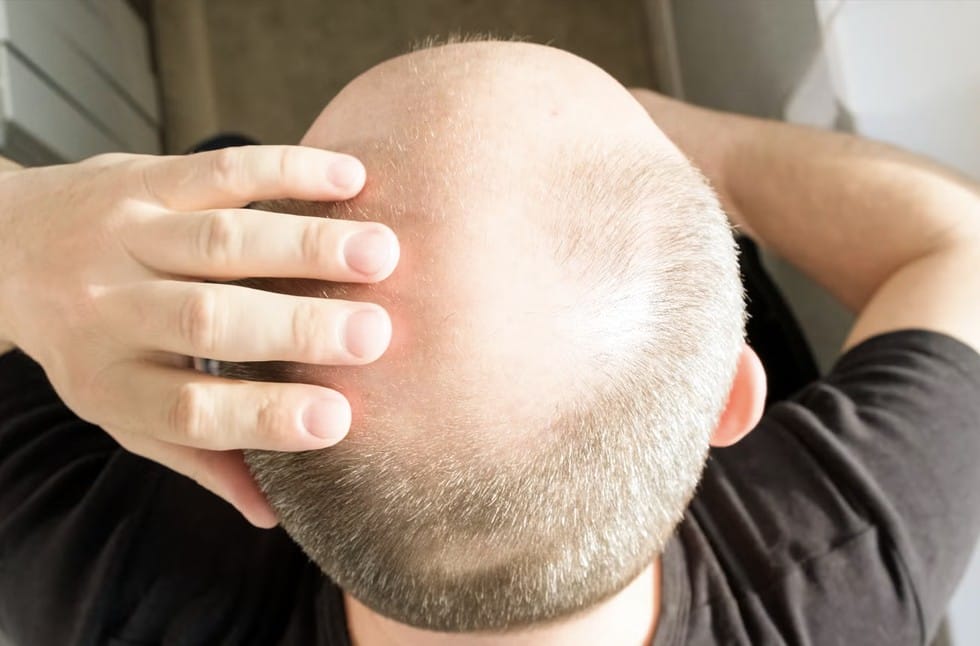
Scientists in China have developed an electric comb that could revolutionize the treatment of hair loss, after laboratory experiments showed the device can restore almost complete hair coverage in affected areas in just 28 days.
As the British newspaper The Independent reports, the device, called “Detangle,” has produced results significantly better than traditional treatments with minoxidil and finasteride, two of the most widely used medications for hair loss.
The technology was developed by a team of scientists from Beihang University in Beijing and is described in a study published on November 3, 2026, in the journal Nature Communications.
The device works by electrically stimulating hair follicles and delivering therapeutic molecules into the deeper layers of the skin.
In experiments on mice, the researchers restored almost 100% of hair coverage in the treated areas within a month, compared with about 70% in the group that received minoxidil.
However, according to The Independent, the technology remains at an experimental stage and has not yet been tested in humans. For this reason, the results so far do not provide evidence that the device can cure hair loss in people.
What does the scientific paper reveal?
The research published in Nature Communications, titled “Combing-triggered electrostimulation synchronizing deep delivery for rapid hair regrowth in androgenetic alopecia,” provides details on how the device works and the biological mechanisms behind its results.
The study was carried out by a team of researchers from several Chinese scientific institutions, including Beihang University in Beijing and City University of Hong Kong.
According to the authors, androgenetic alopecia, known as hair loss caused by genetic and hormonal factors, affects more than 1.5 billion people worldwide.
This condition is characterized by the gradual shrinking of hair follicles, which causes hair to thin, weaken and, in more advanced stages, stop growing noticeably.
Scientists explain that current treatments have several limitations. Oral medications can cause systemic side effects, while products applied directly to the scalp do not always penetrate efficiently to the cells that need treatment.
It is precisely to overcome this obstacle that the “Detangle” device was developed.
How does the comb that stimulates hair growth work?
At first glance, “Detangle” looks like an ordinary comb. However, it contains an electronic system with electrodes integrated into its teeth and special mechanisms for delivering therapeutic substances.
Unlike traditional combs, the device’s teeth are set at different heights.
According to the paper, this structure allows the skin surface to be gently lifted during combing, creating conditions for a stronger and more concentrated electric field to form.
Experiments showed that this special electrode arrangement generates an electric field 2.63 times stronger than electrodes placed at the same height.
This electric field helps push therapeutic molecules into follicle cells through a process known as electroporation, during which electrical pulses temporarily increase the permeability of cell membranes.
The researchers found that the system can deliver therapeutic substances to a depth of about 660 micrometers in the skin within one second.
By comparison, conventional application of substances to the skin’s surface reached a depth of about 74 micrometers.
This means the device enables penetration almost nine times deeper than common external application.
The researchers also reported that the technology increases the efficiency of molecule delivery into target cells by up to 3.4 times.
The treatment targets two causes of hair loss
One of the most important innovations of the technology is combining electrical stimulation with two experimental molecules that act on different biological mechanisms.
The first molecule is a plasmid that encodes the VEGFA factor, which helps promote the formation of new blood vessels.
According to the researchers, improving blood flow around the follicles can create more favorable conditions for supplying them with oxygen and nutrients, supporting the hair growth process.
The second molecule, called SRD5A2 siRNA, aims to reduce the activity of an enzyme that plays a role in producing dihydrotestosterone, known as DHT.
This hormone is one of the main factors contributing to hair loss in people with a genetic predisposition to androgenetic alopecia.
DHT gradually shrinks the follicles, shortening the hair growth phase and making new strands increasingly thin.
By combining the two molecules, the scientists aim to simultaneously improve blood circulation and limit the hormonal impact on the follicles.
The authors believe the interaction of these two mechanisms is one of the main reasons the combined treatment produced better results than either molecule used alone.
How was the 28-day experiment carried out?
To evaluate the technology’s effectiveness, the researchers used laboratory male mice aged five to six weeks.
First, hair was removed from a section of the animals’ backs. Then a testosterone solution was applied to the treated area every day to create an experimental model of hormone-influenced hair loss.
The mice were divided into six main groups, each receiving different treatments.
One group served as a control and did not receive the experimental treatment. Two other groups each received one of the therapeutic molecules through the “Detangle” device.
The fourth group received a combination of both molecules, while the last two groups were treated with oral finasteride and topically applied minoxidil.
The electric comb treatment was applied every three days, while conventional medications were administered daily.
The experiment lasted 28 days, during which the scientists monitored hair regrowth and biological changes in the skin tissue.
Results: Nearly 100% hair coverage
The results showed that the group treated with the combined “Detangle” therapy achieved the greatest recovery of hair coverage.
At the end of the 28-day period, the treated area had nearly 100% hair coverage, a result significantly higher than that of the conventional treatments used in the experiment.
In mice treated with minoxidil, hair coverage reached about 70%.
The combined treatment also produced better results than oral finasteride in the model used by the researchers.
Microscopic analyses confirmed that the group treated with both molecules had more identifiable follicles in the skin tissue than the other groups.
The researchers also noted that the hair regrown in the treated area reached a level of coverage comparable to the normal skin around it.
However, the percentage reported in the study refers to hair coverage of the treated surface in mice and does not mean that the device has restored 100% of lost hair in humans.
Electrical stimulation alone also produced results
The study also included experiments to determine whether electrical stimulation alone could affect hair growth.
The results showed that electrical pulses, even without delivering the two therapeutic molecules, had a positive effect on the follicles.
In the group that received only electrical stimulation, the scientists observed increased hair coverage compared with mice that received no treatment.
The analyses also showed changes in follicle activity and in several biological processes related to cellular metabolism.
But the effect of electrical stimulation alone was significantly more limited than that of the treatment combining electrical pulses with both molecules.
This led the researchers to conclude that the best results are achieved through the interaction of electrical stimulation and molecular treatment.
What changed in the mice’s bodies?
In addition to measuring hair coverage, the researchers carried out detailed tissue analyses to understand what had changed at the biological level.
They found increased local blood flow and greater density of blood vessels around the follicles.
At the same time, the activity of several biological markers linked to follicle regeneration increased.
One of these markers was CD34, which the researchers used to assess the activity of cells associated with hair growth.
The analyses also showed a decrease in the concentration of DHT in the treated tissue.
In addition to hormonal changes, the researchers observed a reduction in several inflammatory factors, including TNF-α, IL-6 and IL-1β.
These markers are linked to inflammatory processes in the body and can affect the biological environment around the follicles.
According to the authors, the results suggest the treatment can simultaneously influence blood circulation, hormonal processes, inflammation and cellular metabolism.
Does the electric comb cause side effects?
The scientists also examined the safety of repeated use of the device.
To this end, they analyzed skin appearance, tissue structure and inflammatory markers after successive applications.
According to the published results, no significant changes were identified in the parameters assessed, compared with the control groups.
However, these results come from laboratory experiments and do not prove the long-term safety of the technology in humans.
The device uses experimental molecules that affect gene expression, so further studies are needed to evaluate possible unwanted effects and the safety of long-term use.
When could it be used on people?
Despite the promising results, the “Detangle” technology is not yet a treatment available to patients.
So far, its effectiveness has been demonstrated in laboratory experiments and animal models.
Androgenetic alopecia in humans is a complex process that develops gradually over years, while the model used in mice was created under controlled experimental conditions.
For this reason, it remains unclear whether the technology could produce similar results in humans and whether restored hair would continue to grow after treatment ends.
Before the device can be used in medical practice, further safety studies will be needed, followed by clinical trials in humans.
It is also not yet known when these trials might begin or when the technology could become commercially available.
However, the study’s authors believe the platform they developed could serve as a basis for a new generation of hair loss treatments.
In the future, the system could also be adapted to deliver other therapeutic molecules into the skin, potentially expanding its use beyond androgenetic alopecia.
For now, the results represent a promising experimental achievement, but not a proven cure for hair loss in humans. /Reporteri.net
Our editorial team writes and publishes its articles with the help of AI, and every article is reviewed by our editors.