




For decades, scientists have tried to find ways to slow the aging process. But a new direction in scientific research aims at something far more ambitious: restoring aging cells to a biologically younger state.
David Sinclair, a professor of genetics at Harvard Medical School and one of the best-known researchers in the biology of aging, believes humanity is approaching an important turning point in this field.
In an interview of more than two hours on Peter Diamandis’s podcast “Moonshots,” published on November 28, 2026, Sinclair discussed progress in longevity research, the first clinical trials in humans, and the possibility of developing drugs that would target the biological mechanisms of aging itself.
The Australian-born professor, who has been studying this process for about three decades, says developments in his laboratory have far exceeded the expectations he had at the start of his career.
However, while some of the results are promising, science has not yet shown that it can restore the biological youth of the entire human body.
Why do we age if our genetic information remains mostly the same?
One of the theories Sinclair has developed over the course of his career concerns the gradual loss of epigenetic information.
To understand this theory, one must distinguish between the genome and the epigenome.
The genome contains the organism’s genetic information, while the epigenome includes the mechanisms that help regulate gene activity.
Almost all cells in the body contain the same genetic information. Yet a liver cell performs functions completely different from those of a skin cell or a brain cell.
This is possible, among other reasons, because of the way gene activity is regulated in each cell.
Sinclair’s hypothesis is that over the years, part of this regulatory system becomes disrupted, affecting the ability of cells to carry out their functions.
If scientists manage to restore this information without damaging the cells or changing their identity, they could theoretically recover some of the functions the body has lost during aging.
In 2023, a study by Sinclair’s team, published in the scientific journal Cell, provided experimental evidence for the role of epigenetic changes in aging in mice.
However, the theory does not mean that all aspects of aging have been fully explained. Aging involves a range of biological mechanisms that interact with one another.
From lab experiments to the first patients
One of the most concrete developments in this field is the experimental therapy ER-100, developed by the biotechnology company Life Biosciences, which Sinclair co-founded.
The therapy aims at partial epigenetic reprogramming of cells and is currently being studied for the treatment of diseases that damage the optic nerve.
On January 28, 2026, the company announced that it had received authorization from the U.S. Food and Drug Administration (FDA) to begin clinical trials.
In October, Life Biosciences published preliminary data from the first three participants with open-angle glaucoma.
During the interview, Sinclair described the initial results as encouraging, but he was careful not to claim that the therapy’s effectiveness had already been proven.
The study is in its first clinical phase, whose main goal is to assess the safety of the treatment. Only further studies, with more patients and longer monitoring periods, can determine whether the therapy is effective.
For now, ER-100 is not an approved treatment for general use and does not constitute proof that human aging can be reversed throughout the body.
Another direction: Drugs aimed at restoring cellular function
Alongside gene therapies, researchers are examining the possibility of using chemical molecules to influence epigenetic mechanisms.
If such an approach proves safe and effective, it could open the way to treatments that are easier to administer than gene therapies.
But developing a drug for aging presents major challenges.
It is not enough for cells to show the biological characteristics of a younger age. Researchers must show that the changes bring real benefits to the body, improve the functioning of organs, and do not cause dangerous long-term consequences.
Particularly important is control over the reprogramming process, since uncontrolled changes in gene activity could endanger the identity and normal functioning of cells.
Can several diseases of old age be treated at the same time?
Cardiovascular diseases, dementia and many metabolic disorders become more common as people age.
Rather than treating each of these diseases only after it has appeared, one of the ambitions of aging biology is to identify the shared mechanisms that contribute to their development.
Sinclair hopes that in the future, treatments may be developed that act on several age-related diseases at once.
Such a development would substantially change the way medicine works, placing greater emphasis on preventing biological damage and preserving the body’s functions.
But this remains a scientific ambition, not a clinical result that has been achieved.
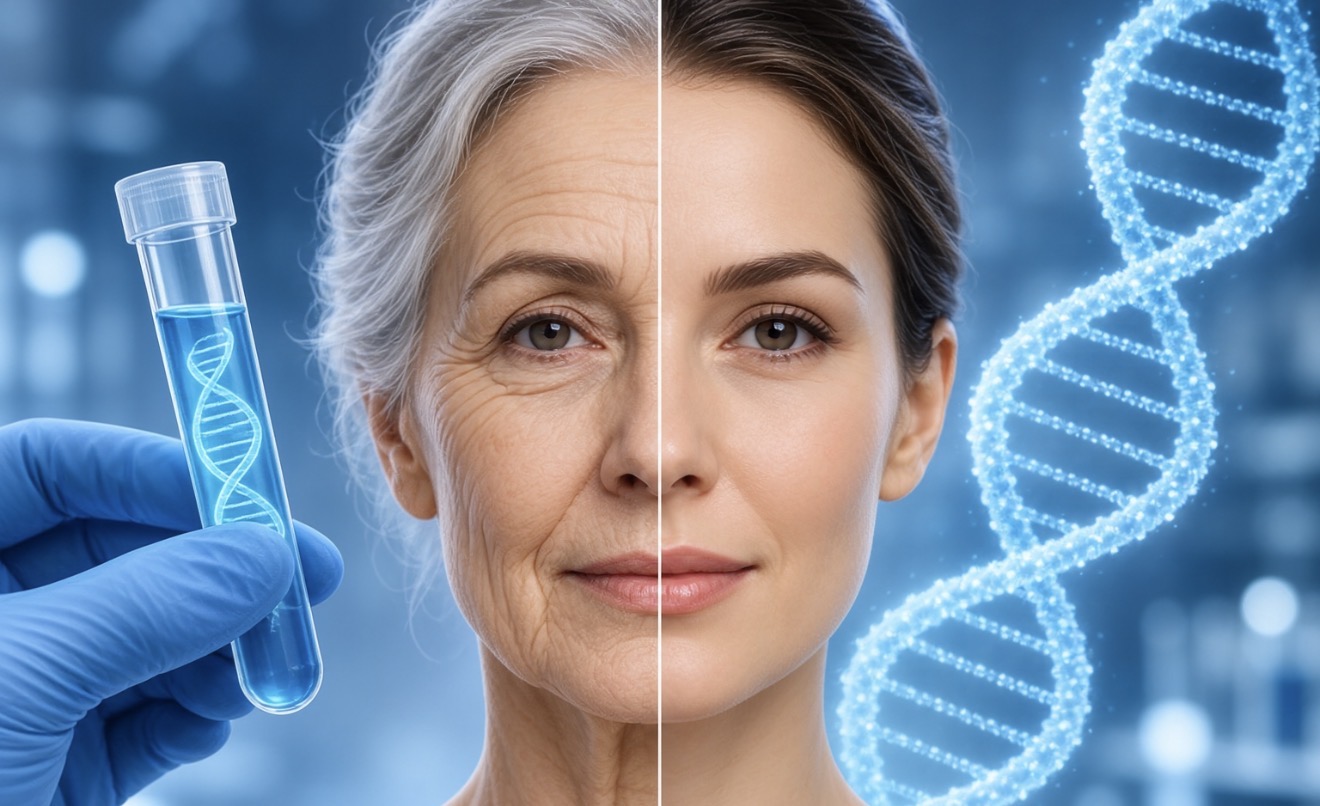
In the debate about the future of longevity, an increasingly important concept is that of years lived in good health, known in the scientific literature as “healthspan.”
Living longer does not necessarily mean living better, especially if the additional years are accompanied by chronic disease and loss of physical or mental independence.
For this reason, the goal of many researchers is not simply to raise maximum lifespan, but to add years during which people can keep working, communicating, moving and living independently.
Sinclair believes technological advances could make a major difference in this regard.
However, the path from the first laboratory results to a safe, effective therapy available to millions of people remains a long one.
For now, restoring the youth of the entire human body remains a research goal. But the first clinical trials of partial epigenetic reprogramming represent an opportunity to test this approach in treating specific diseases. /Reporteri.net
Our editorial team writes and publishes its articles with the help of AI, and every article is reviewed by our editors.