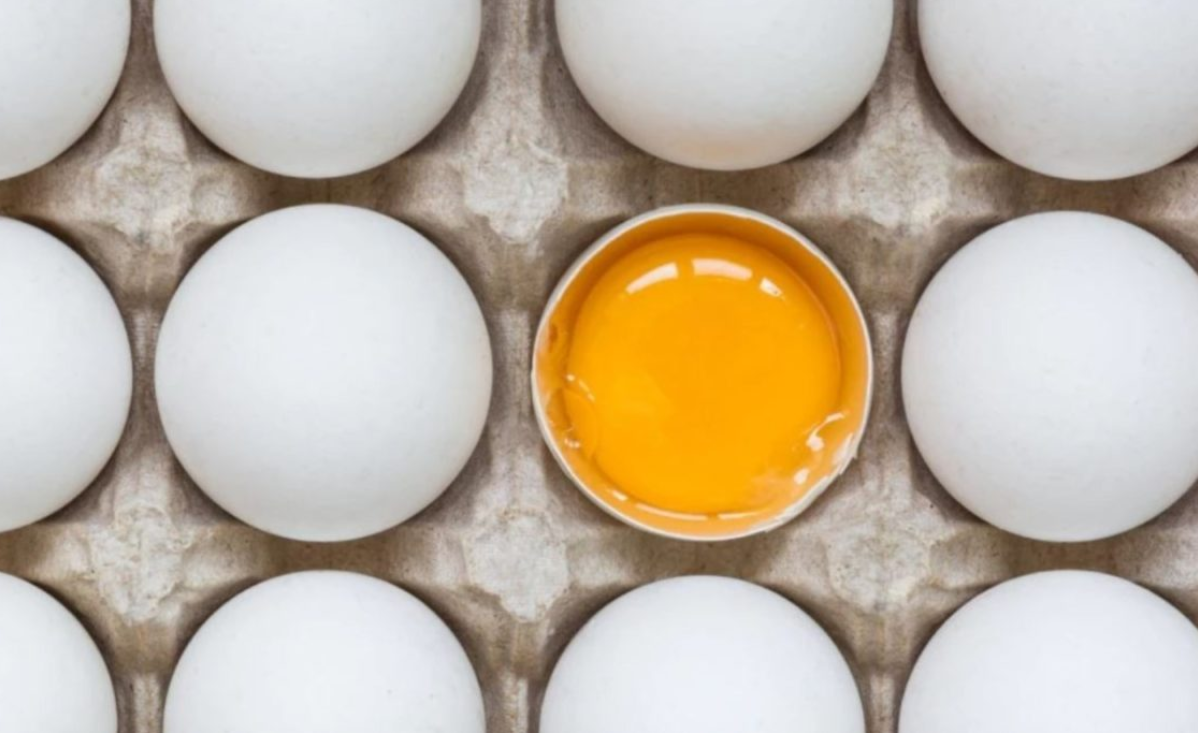
Have you ever wondered how egg white changes from a clear, gelatinous liquid into a white, compact substance? Anyone who has tried beating egg whites until they form a snow-like foam knows how little it takes to make that difference. But even looking at a cooked egg white raises some questions, at least for those who are passionate about physics and chemistry.
Sunny-side-up eggs. In seconds, under the effect of heat, egg whites shift from a thick, transparent liquid into a white, solid substance. How does this happen? One experiment has studied it in detail. Nafisa Begam and her colleagues at the University of Tübingen in Germany set out to answer the question.
The researchers separated chicken egg white and heated it, bombarding it with X-rays using a special technique that allows them to visualize what happens at the micrometer scale, or thousandths of a millimeter.
This allowed them to reconstruct the movement of the proteins that make up egg white. They watched the proteins unfold and then bind to one another, forming a kind of spider-web network, which is what gives the cooked material its gelatinous yet firm consistency.
In particular, they noted that the spider-web network forms within the first two minutes of applying heat. After that, practically nothing happens at the structural level: the egg may burn, but the protein network does not change, and neither does the consistency.
According to the researchers, who published their findings in Physical Review Letters, a better understanding of how eggs cook is important, given how ubiquitous eggs are in industrial food production.
Beyond that, the discovery could be used to study how soft materials used in industry or medical applications respond to heat.
Our editorial team writes and publishes its articles with the help of AI, and every article is reviewed by our editors.