As the colder days arrive, many people wonder how to keep their apartment warm without their heating bills becoming too high.
Experts stress that even a small change in temperature can have a noticeable impact on energy consumption.
Lowering the temperature in an apartment by just one degree can save about 7% of the energy needed for heating. This means that households that reduce the temperature from 22 to 20 degrees can cut their energy consumption by roughly 13 to 14%.
According to estimates by the International Energy Agency (IEA) and the European Commission, the average temperature in heated homes in the European Union is above 22 degrees, although many people would feel comfortable at 19 or 20 degrees.
These estimates were published in 2022, at a time of sharp rises in energy prices in Europe.
According to calculations from that time, an average household in the European Union could save more than 70 euros a year for each degree of reduction in temperature. However, actual savings depend on the size of the apartment, the heating method, household habits and energy prices.
It is important to note that reducing consumption will not necessarily be reflected in the bill if heating is charged as a fixed fee per square meter. Savings are financially visible mainly when a household pays for energy based on actual consumption.
What temperature is recommended for certain rooms?
The German Federal Environment Agency (Umweltbundesamt) recommends that the temperature in the living room not exceed 20 degrees.
For the kitchen, a temperature of about 18 degrees is recommended, while about 17 degrees is sufficient for the bedroom.
When no one is at home for several hours or during the night, the temperature can drop to around 18 degrees.
If you will be away for several days, it is recommended to lower the temperature to about 15 degrees.
For radiators with thermostatic valves, the middle setting, usually marked with the number three, typically corresponds to a temperature of about 20 degrees.
A thermostat can reduce consumption further
Programmable thermostats, which automatically lower the temperature at night or while residents are at work, can cut energy consumption by about 10%, according to data from the German agency.
The International Energy Agency and the European Commission state that smart and digital thermostats can deliver savings of up to 15%.
Their advantage is that they allow the temperature to be adjusted to daily routines without the need for constant manual adjustment.
Curtains and blinds help keep heat inside
During cold nights, a considerable amount of heat is lost through windows.
Drawing curtains or closing shutters can reduce heat loss through windows by about 20%, while curtains can also help retain heat.
However, it is important that curtains do not cover the radiators.
Furniture, especially large wardrobes and sofas, should not be placed directly in front of heating elements, because it interferes with the even spread of heat.
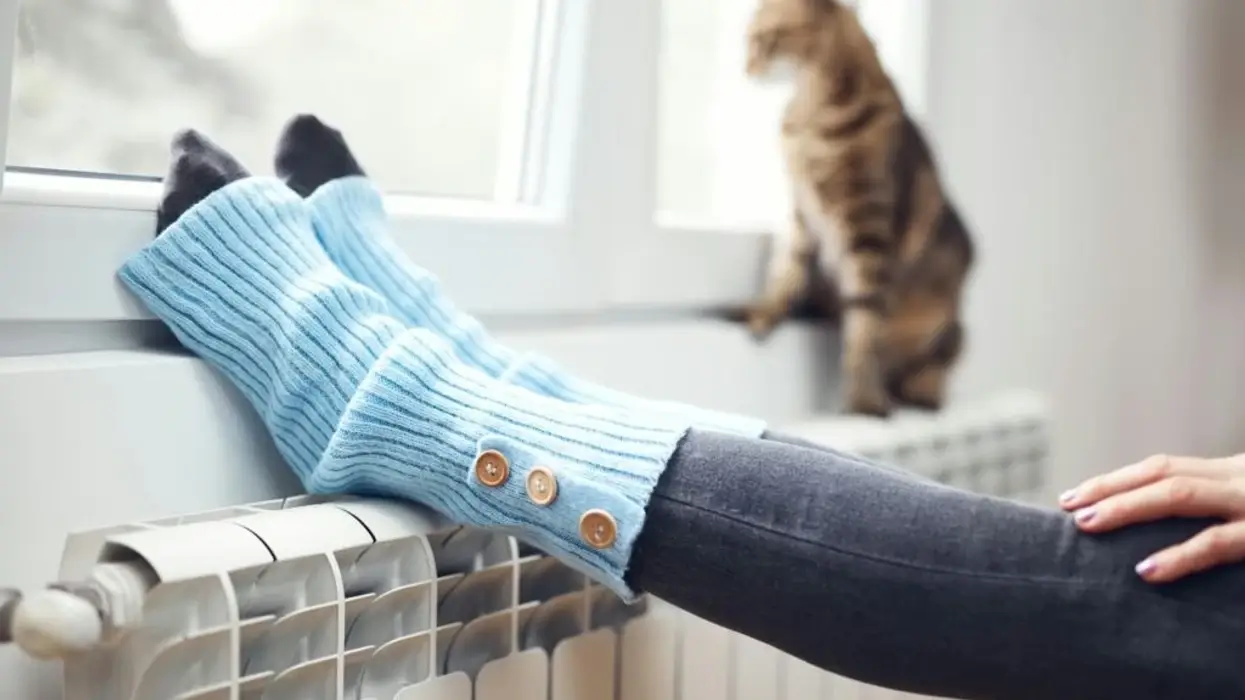
The same applies to drying clothes directly on radiators, which can reduce heating efficiency.
Our editorial team writes and publishes its articles with the help of AI, and every article is reviewed by our editors.