In a world of work and technology that changes rapidly, the ability to continually acquire new knowledge has long ceased to be a pleasant option and has become an absolute survival strategy. Whether it is a new programming language, a foreign language, complex financial markets or advanced digital tools, many adults feel that learning later in life becomes more laborious and takes more time than it did during school or university. Yet modern research on neuroplasticity and cognition paints a completely different picture. The adult brain remains malleable throughout life; it simply learns differently. Those who understand the biological and psychological laws of adult learning can master complex skills not only much faster, but also more durably.
The Myth of Declining Learning Ability with Age
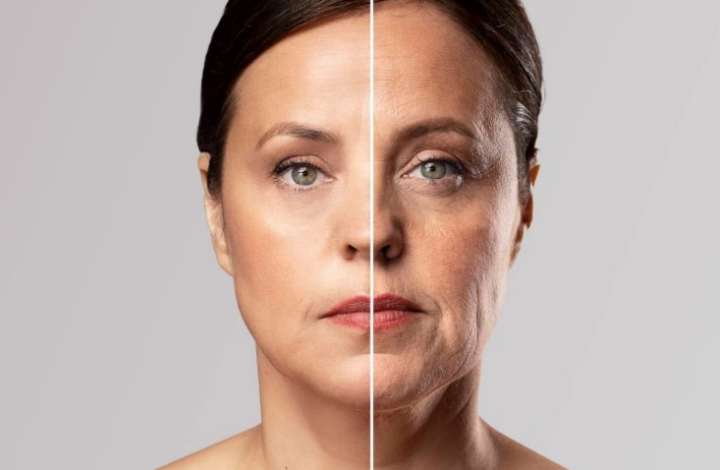
A widespread misconception holds that children learn like sponges, while adults run into a biological wall. This is not the case. While children often absorb information passively and without structure, adults have a decisive evolutionary advantage: prior knowledge and metacognition.
The adult brain connects new information to existing mental models at lightning speed. When we learn a new skill, we no longer build an empty house but renovate an existing building. Therefore, the challenge of adult learning rarely lies in a lack of biological capacity to absorb information, but rather in two factors: a lack of uninterrupted time, and fear of mistakes and incompetence. Adults want to master things perfectly right away, which curbs the neural drive to experiment.
Four Science-Based Strategies for Learning Faster
Anyone who wants to master complex skills as an adult should structure the learning process like a professional athlete. Here, efficiency can cut down the time spent on passive activities:
- The principle of deliberate deconstruction (chunking): Complex skills, such as programming or understanding a new science, look intimidating because they are so intricate. The solution lies in breaking the skill into its smallest learnable micro-blocks and mastering them one after another.
- Active recall instead of passive consumption: Reading professional books or watching video tutorials seems productive, but it is extremely inefficient. Real learning happens when the brain is forced to actively retrieve information (Active Recall), for example through direct application, explaining it in your own words or solving practical tasks.
- Deliberate Practice: Instead of repeating the same thing on autopilot, you consciously focus on your weak points, actively seek feedback and correct mistakes in real time.
- Spaced Repetition: Information is not crammed into one marathon study session but is repeated at ever-longer intervals (1 day, 3 days, 1 week, 1 month) to anchor knowledge permanently in long-term memory.
Mental Release and the Importance of Rest Periods
Learning is a biochemical process that consumes energy and leaves traces in the brain. One of the biggest mistakes adults make during self-directed learning is working nonstop for hours on end. The brain absolutely needs phases of consolidation.
While we sleep or rest in a relaxed state with few stimuli, the hippocampus sorts and compresses what we have learned during the day and stores it permanently in the neocortex. To support this process of mental processing, it helps to stop the learning mode abruptly after an intensive session. Many successful self-taught learners, after a mentally demanding task, use a brief, playful distraction, such as a relaxed break with a simple digital entertainment at a bitcoin casino, to immediately break their tunnel-like analytical focus and give their brain the space it needs to catch its breath.
The Joy of Discovery Throughout Life
Lifelong learning is not a grueling obligation but perhaps the most effective investment in your mental health and professional independence. Those who understand that mistakes are not proof of a lack of talent, but essential neural signals of growth, lose their fear of new challenges. With the right methods, learning complex skills as an adult becomes an enriching journey of discovery, showing that human potential is never tied to a particular age.
Originally published in Albanian on Reporteri.net. Translated from Albanian with the help of AI.